What Are Microsegmentation Tools?
Microsegmentation tools improve network security by dividing a network into smaller, manageable segments. Unlike traditional segmentation that relies on physical barriers, microsegmentation allows organizations to enforce security policies within a logical boundary, making network management more adaptable and secure.
These tools help isolate and protect workloads within a network, ensuring that even if one part of the network is breached, the rest remains secure. The primary focus of microsegmentation tools is to minimize the attack surface within a network.
By creating smaller segments and defining strict access controls, these tools limit lateral movement for potential intruders. This is crucial in environments where sensitive data is handled, as microsegmentation ensures that data is only accessible to authorized users and applications.
Because many modern workloads run in Kubernetes, microsegmentation is closely tied to broader container security practices that protect images, runtimes, and inter-service traffic.
Teams securing containerized workloads can start with our broader guide to Kubernetes security, which covers the controls surrounding segmentation.
Editor’s note: Updated the article to include latest microsegmentation market trends, and updated information for microsegmentation tools to reflect features and capabilities in 2026.
In this article:
- Microsegmentation Market and Trends
- Key Features of Microsegmentation Tools
- Notable Microsegmentation Tools
Microsegmentation Market and Trends
Market Size and Growth Outlook
According to recent market research, the microsegmentation market is valued at USD 21.58 billion and is projected to reach USD 62.30 billion by 2030. This reflects a compound annual growth rate (CAGR) of 23.62%. The growth rate shows that microsegmentation is shifting from a niche security control to a core part of enterprise security architecture.
This expansion is driven by increased lateral-movement attacks, tighter regulation of east-west traffic, and broader adoption of zero-trust models. Organizations are moving away from static perimeter defenses and toward workload-level isolation that works across hybrid and cloud-native environments.
Key Market Segments
By Component: Software accounted for 64.24% of revenue. However, services are growing faster, with a projected 24.12% CAGR through 2030. This reflects rising demand for consulting, integration, and ongoing compliance support.
By Deployment Mode: On-premises deployments held 58.78% of market share, largely due to data sovereignty and legacy infrastructure needs. Cloud-based implementations are expanding at a 23.91% CAGR, supported by hybrid cloud adoption and policy-as-code models.
By Organization Size: Large enterprises represented 71.53% of the market, driven by regulatory exposure and complex infrastructures. Small and medium enterprises are growing faster at 24.32% CAGR, enabled by SaaS-based offerings and subscription pricing.
By Industry: BFSI led with 28.42% market share. Healthcare and life sciences are growing at 23.83% CAGR, fueled by proposed HIPAA updates and the need to isolate medical devices and sensitive data environments.
By Geography: North America accounted for 42.33% of the market, supported by federal zero-trust mandates and high breach costs. Asia-Pacific is the fastest-growing region at 23.79% CAGR, driven by sovereign IT initiatives and increasing ransomware activity.
Key Features of Microsegmentation Tools
Zero Trust Segmentation
Zero trust segmentation operates on the principle of never trusting but always verifying access requests, regardless of their origin. This ensures that each access request within the network undergoes strict verification before being granted. By applying this model, microsegmentation tools limit trusted access, reducing the risk of insider threats and lateral movement.
This approach requires continuous monitoring and verification of user, device, and data flows. It helps in maintaining tight security control without hindering legitimate user activities.
For a deeper look at how these principles combine in practice, see our guide on microsegmentation zero trust architectures.
Encryption and Secure Communication
Microsegmentation tools utilize encryption algorithms to protect data in transit, preventing interception or unauthorized access by malicious actors. By securing data flows, organizations can protect sensitive information, maintaining compliance with data protection regulations.
Additionally, microsegmentation tools enable secure communication between different segments, reducing vulnerabilities during data exchange. By encrypting communication channels, they provide an additional layer of defense against network-based attacks.
Organizations handling cardholder data should also review our guide on network segmentation for PCI DSS to align segmentation controls with regulatory requirements.
Granular Policy Enforcement
Granular policy enforcement allows organizations to establish security policies tailored to each network segment. This ensures that security rules can be applied at the application level, protecting processes from unwanted access.
These policies can dynamically adjust to changes in the network environment. For example, if an application changes its communication pattern, granular policies can accommodate it without sacrificing security.
When these policies are scoped to a single app and its dependencies, the practice is usually called application segmentation.
Visibility and Monitoring
Visibility and monitoring capabilities are essential for identifying anomalies and potential threats in real time. Microsegmentation tools provide insights into network traffic, offering a clear view of communication patterns between workloads. This level of transparency helps security teams detect unauthorized access attempts or unexpected changes in traffic behavior promptly.
Monitoring tools can also capture detailed logs and analytics, which are invaluable during forensic investigations or compliance audits. Enhanced visibility ensures that organizations can not only react to potential threats but also anticipate and prevent them.
Multi-Environment Support
Multi-environment support ensures that microsegmentation tools can operate across diverse IT environments, including on-premises, cloud, and hybrid infrastructures. This enables consistent policy enforcement, maintaining a uniform security posture irrespective of the underlying infrastructure.
Organizations benefit from simplified management, as security policies can be unified and applied across different platforms without modification. By supporting multiple environments, these tools enable organizations to leverage the best technology solutions for their needs.
Related content: Read our guide to microsegmentation security
Notable Microsegmentation Tools
Agent-Based / Software-Defined Microsegmentation Platforms
1. Calico

Calico is a network security and observability platform designed for securing workloads across containers, virtual machines, and bare metal. It provides dynamic network security policies to prevent unauthorized access and lateral movement.
Because it is Kubernetes-native, Calico is a common starting point for teams implementing Kubernetes microsegmentation.
Key features include:
- Dynamic segmentation: Uses workload metadata to enforce segmentation policies automatically, ensuring consistent security as workloads scale.
- Policy enforcement: Supports microsegmentation with fine-grained policy controls at the workload level. Policies can be staged, previewed, and modified before deployment.
- Visibility: Provides detailed insights into network activity and policy impact, enabling security teams to optimize segmentation strategies.
- Scalability: Designed for high-performance enforcement across large-scale cloud and hybrid environments without centralized bottlenecks.
- Automated policy recommendations: Analyzes workload behavior and suggests security policies, reducing manual effort and simplifying microsegmentation adoption.
- Supports container, VM, and bare metal: Ensures consistent security policy enforcement across diverse environments, including containers, virtual machines, and physical servers.

Source: Tigera
2. Illumio Core

Illumio Core is a microsegmentation platform to control network traffic between workloads in data centers and cloud environments. It separates policy management from enforcement by using a centralized policy engine and agents deployed on workloads. These components monitor traffic flows, generate segmentation policies, and enforce rules through host-based firewalls to restrict communication between systems.
Key features include:
- Policy compute engine: A central controller that manages segmentation policies and coordinates enforcement across workloads.
- Virtual enforcement node: An agent installed on workloads that applies policies using the native host firewall.
- Managed and unmanaged workload support: Policies can be applied to systems with installed agents or to defined unmanaged assets represented in the platform.
- Traffic flow monitoring: Captures and analyzes communication between workloads to identify allowed, blocked, and unknown traffic.
- Multiple enforcement modes: Workloads can operate in idle, visibility, or enforcement modes to observe traffic before applying restrictions.
- Workload coverage across environments: Supports workloads running on bare metal, virtual machines, or container hosts in both private data centers and cloud environments.

Source: Illumio
3. Cisco Secure Workload

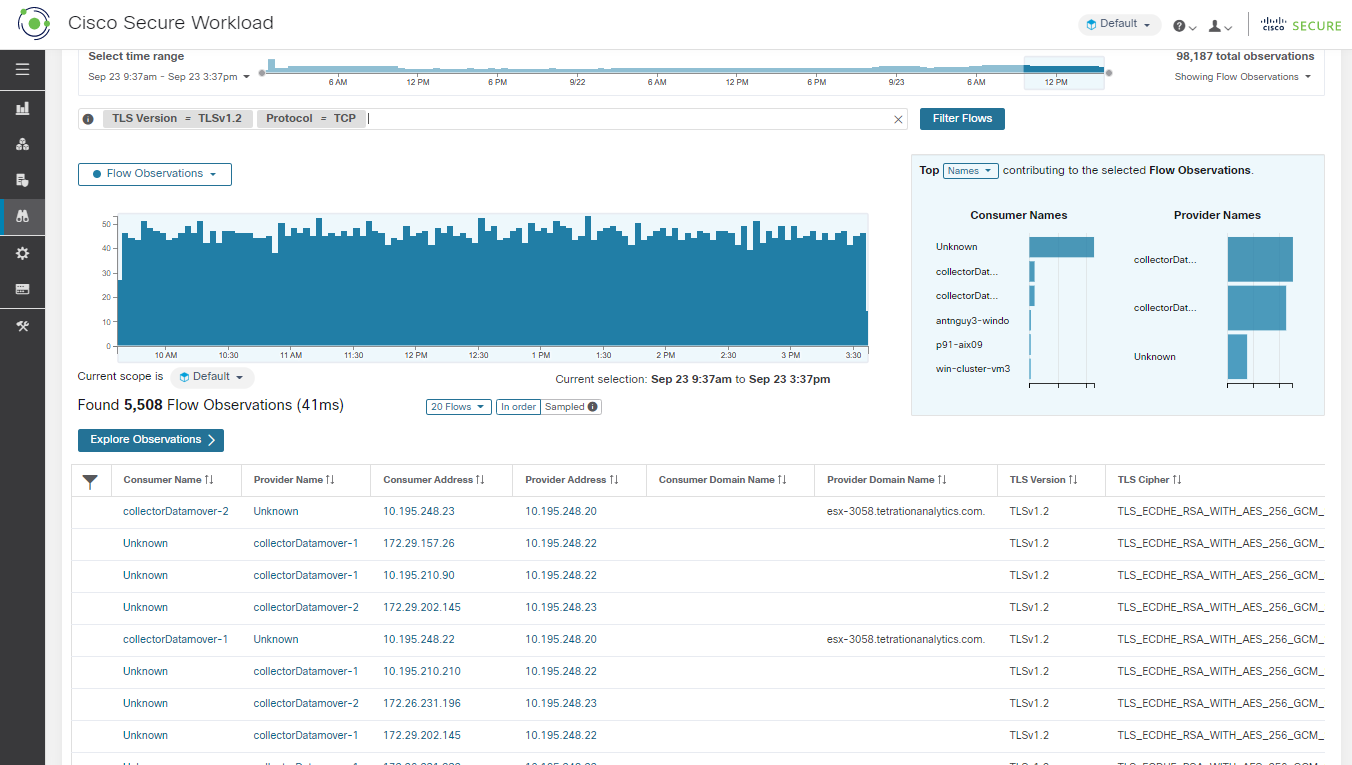
Cisco Secure Workload is a microsegmentation and workload protection platform that enforces zero trust policies across application environments. It monitors interactions between workloads and uses telemetry data to generate segmentation policies that control how applications communicate. The platform supports deployments across data centers, public clouds, and hybrid infrastructures.
Key features include:
- Zero trust microsegmentation: Enforces strict policies to ensure that only authorized communication between workloads is permitted.
- Workload interaction visibility: Provides telemetry and analytics that show how applications and workloads interact across environments.
- Automated policy generation: Uses workload insights to recommend and enforce segmentation policies.
- Real-time alerts and forensics: Generates near real-time alerts and maintains an auditable record of activity for investigation and compliance.
- Flexible deployment models: Available as both a SaaS solution and an on-premises deployment.
- Hybrid and multicloud support: Protects workloads across cloud platforms, data centers, and distributed application environments.
Source: Cisco
4. Akamai Guardicore Segmentation

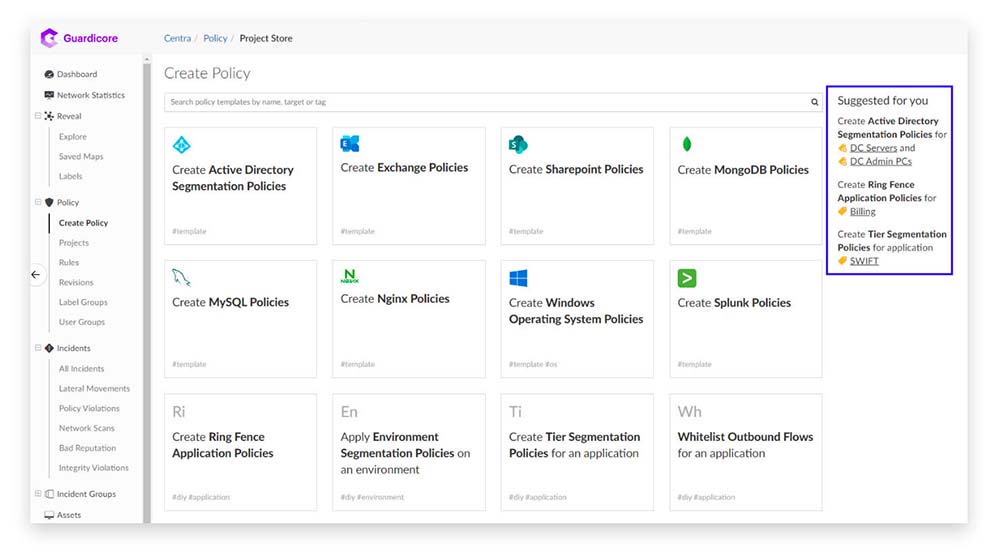
Akamai Guardicore Segmentation is a software-based microsegmentation platform to enforce segmentation policies across hybrid and multicloud environments. It maps network assets and communication flows to provide visibility into application interactions, allowing organizations to control traffic between workloads and prevent lateral movement during attacks.
Key features include:
- Granular segmentation policies: Applies segmentation controls down to individual services or processes.
- Network activity visualization: Maps assets and traffic flows to provide real-time and historical visibility into system communication.
- Lateral movement detection: Identifies suspicious activity and helps contain attacks across the cyberattack lifecycle.
- Software-based enforcement: Eliminates the need for dedicated security hardware while supporting both modern and legacy systems.
- Template-based policy creation: Provides prebuilt workflows and templates to simplify segmentation policy design.
- Integration with orchestration tools: Uses asset labeling and integrations with systems such as CMDBs and orchestration platforms to automate policy management.
Source: Akamai
Cloud-Delivered / Agentless Segmentation Solutions
5. Zscaler Workload Segmentation

Zscaler Workload Segmentation is a cloud-based microsegmentation solution that protects workloads across cloud and hybrid infrastructures. It uses an agent-based architecture and real-time telemetry to identify workload relationships and enforce segmentation policies that prevent unauthorized communication between systems.
Key features include:
- Granular workload segmentation: Applies segmentation policies to isolate workloads and reduce the attack surface.
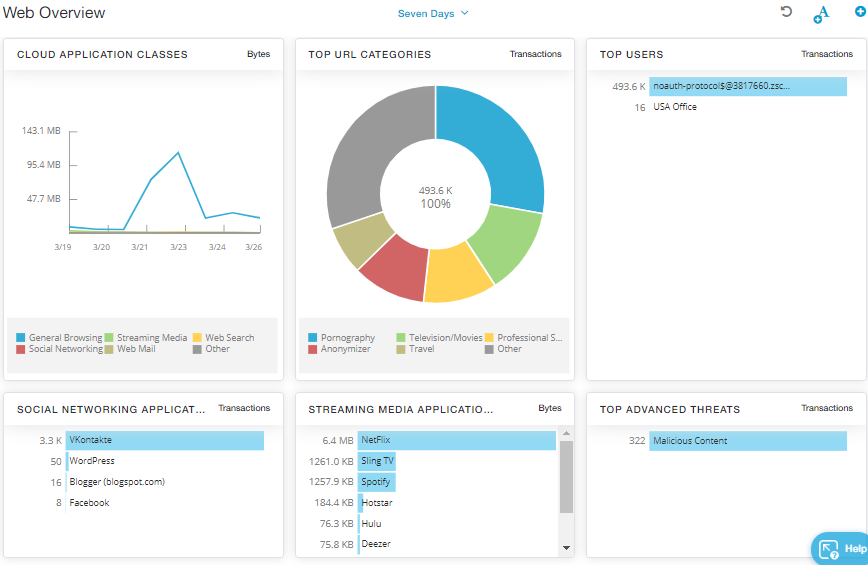
- Traffic visibility and inventory: Provides detailed views of assets and communication flows between workloads.
- AI-assisted policy recommendations: Uses telemetry data to recommend security groupings and segmentation policies.
- Zero trust enforcement: Applies zero trust principles to restrict unauthorized access between workloads.
- Platform integration: Extends the Zscaler Zero Trust Exchange to secure communication across data centers, clouds, and branches.
Source: Zscaler
6. Zero Networks Segmentation

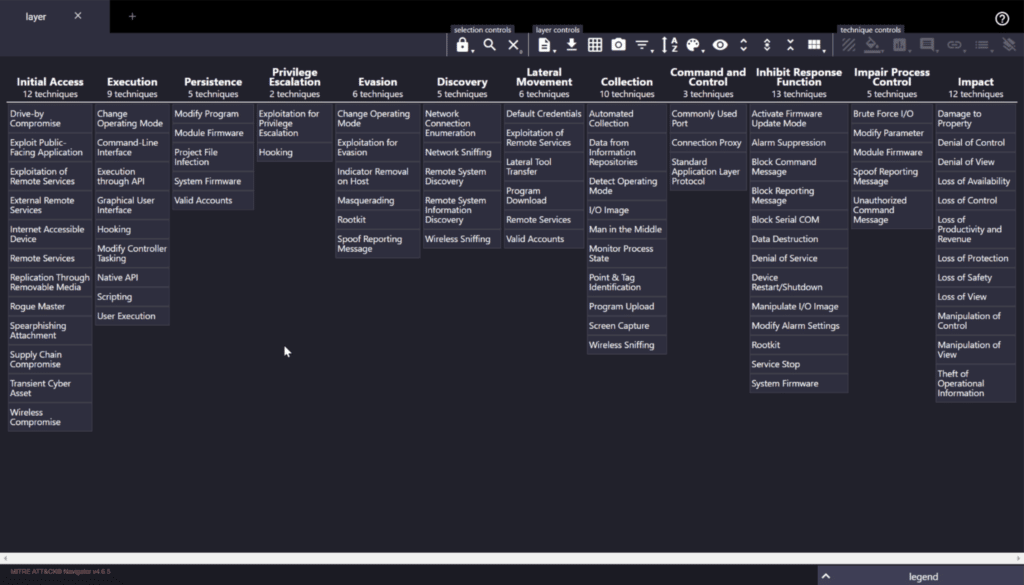
Zero Networks Segmentation is an automated microsegmentation platform that creates and enforces segmentation policies by analyzing network communication patterns. The system learns how assets interact over time and then generates firewall rules to restrict unnecessary connections, reducing the risk of lateral movement.
Key features include:
- Automated segmentation learning: Observes network communication patterns to generate segmentation rules automatically.
- Rapid deployment model: Deploys quickly and learns network connections over time before enforcing policies.
- Host-based firewall enforcement: Applies segmentation policies directly to host firewalls.
- Dynamic zero trust policies: Enforces least-privilege access controls across network assets.
- Visibility into assets and traffic: Provides insights into network activities and communication between systems.
Source: Zero Networks
7. Xshield Enterprise Microsegmentation

Xshield Enterprise Microsegmentation is a platform that helps prevent the lateral spread of ransomware and malware by creating micro-perimeters around network assets. It provides tools for visualizing network communication and designing segmentation policies through guided workflows and policy simulations.
Key features include:
- Guided policy workflows: Uses templates and heuristics to recommend segmentation policies.
- Visual policy design: Displays network relationships through maps that help define allowed and denied traffic flows.
- Policy simulation: Allows policies to be tested before enforcement to avoid operational disruptions.
- Risk posture dashboards: Provides dashboards that track segmentation progress and risk reduction.
- Asset tagging and automation: Uses rule-based tagging and automated recommendations to simplify policy management.

Source: Xshield
Conclusion
Microsegmentation tools support modern network security by reducing the attack surface, preventing lateral movement, and protecting sensitive data. By enabling granular policy enforcement, enhanced visibility, and zero trust principles across diverse environments, these solutions provide organizations with robust, adaptable protection.