






In today’s fast-paced cloud-native world, scaling security alongside rapid development cycles presents significant challenges. As organizations increasingly adopt Kubernetes, ensuring consistent, fine-grained security across dynamic workloads becomes essential. Calico’s policy model for microsegmentation offers a scalable solution that integrates seamlessly into DevSecOps workflows, enabling teams to implement robust security controls without compromising agility. In this post, we’ll explore how Calico’s policy model supports scalable microsegmentation, reduces operational complexity, and strengthens security through a zero trust approach, all while enhancing collaboration across development, security, and operations teams.
Why Implement Microsegmentation?
microsegmentation offers a wide range of security benefits that help organizations strengthen their defenses, reduce the attack surface, and meet compliance requirements. Below are some of the key advantages that highlight why microsegmentation is essential for Kubernetes security.
- Assume Breach Mindset: Microsegmentation limits lateral movement and isolates threats to infected workloads, minimizing the blast radius.
- Zero Trust Architecture: Trust is explicitly granted, preventing workloads from accessing others within the same network segment without proper authorization.
- Reduced Attack Surface: Microsegmentation reduces exposed workloads at the granular level, lowering the chances of unauthorized access and breaches.
- Compliance: It helps organizations meet industry-specific compliance requirements by isolating sensitive workloads and demonstrating effective security controls.
- Improved Threat Detection and Response: Microsegmentation enhances detection of abnormal behavior and enables quicker responses, such as quarantining compromised workloads
Challenges Implementing Microsegmentation
Before diving into the implementation of microsegmentation, it’s important to understand the potential challenges that can arise during its implementation. These obstacles often stem from both technical and operational factors, which, if not properly addressed, can hinder business operations, lead to compliance violations, and result in a weak security posture, thereby reducing the effectiveness and scalability of the microsegmentation solution. Below are some of the most common challenges organizations encounter during the microsegmentation implementation
- Initial Setup and Configuration: Implementing microsegmentation in live production environments can disrupt existing workloads, especially if network policies are applied after the platform has scaled.
- Inconsistent Policy Enforcement: Without a predefined policy model, different team members may implement network policies inconsistently, leading to complexity and operational challenges over time.
- Complexity in Policy Management: Lack of policy governance leads to confusion about roles and responsibilities, causing further complexity and making it harder to manage policies effectively.
- Scaling Issues: As environments grow, scaling microsegmentation becomes difficult without a holistic policy model that can accommodate diverse groups of workloads and requirements.
- Resource and Skill Requirements: Insufficient resources and expertise to implement or operationalize microsegmentation can overwhelm teams, especially if the deployment is overly complex.
A hierarchical policy model can effectively address these challenges by providing a structured approach to policy enforcement, ensuring consistency, scalability, and ease of management while minimizing resource strain and operational complexity.
A Hierarchical Policy Model
Designing the network policy model that scales with your cluster in a systematic manner ensures that all aspects of your Kubernetes cluster are adequately protected while addressing the challenges involved in implementing and operationalizing microsegmentation. There are three steps involved in defining the network policy model:
- Identify Kubernetes Security Domains
- Define Calico Network Policy Tiers
- Define Network Policy Standards
Next, let’s look at each of these steps in detail.
Kubernetes Security Domains
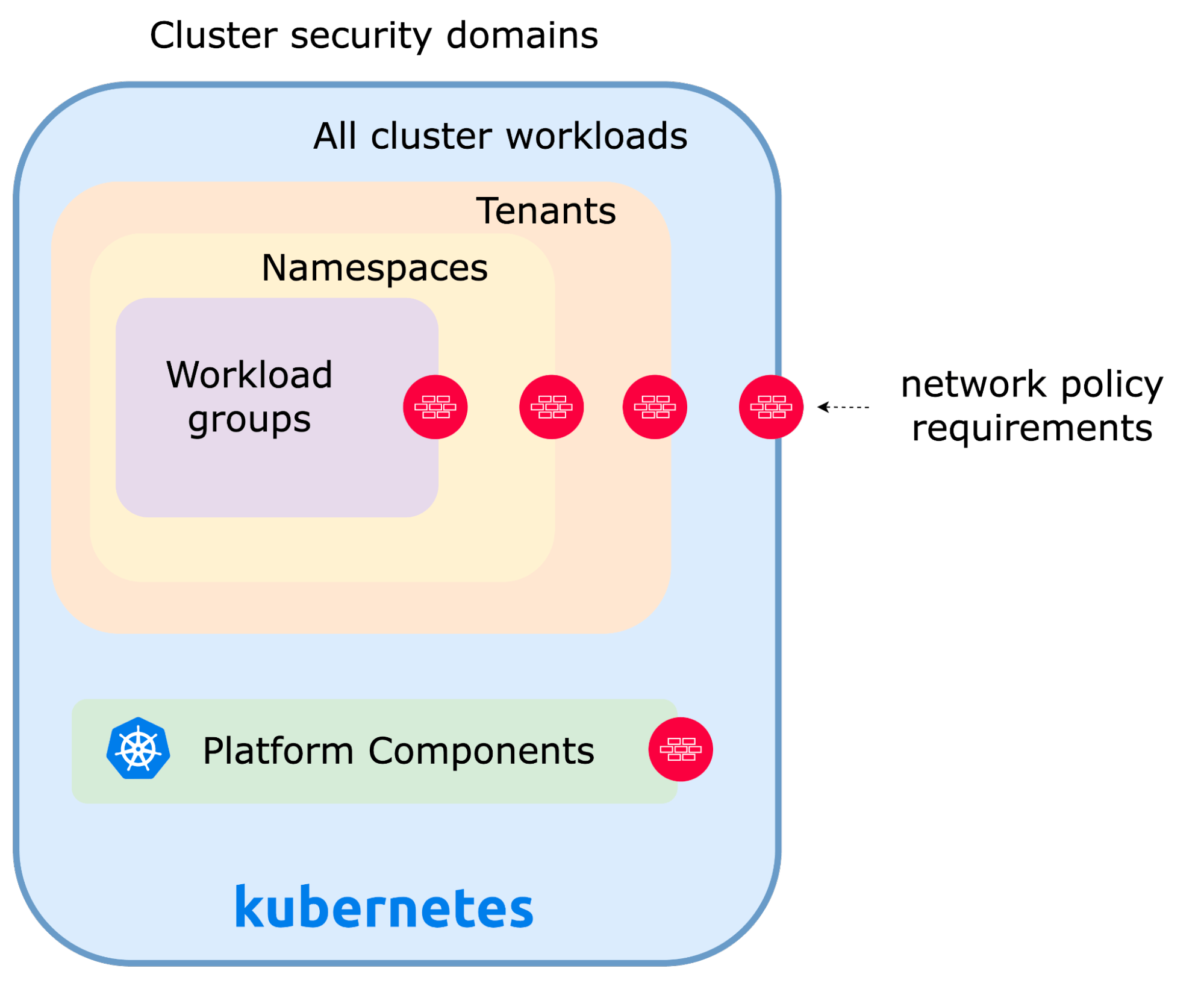
This initial step involves mapping out the different areas within your cluster that require distinct security controls. By identifying these domains—such as workloads, namespaces, tenants, and platform components—you create the foundation for applying targeted security measures that align with the unique needs of each segment.
Calico Network Policy Tiers
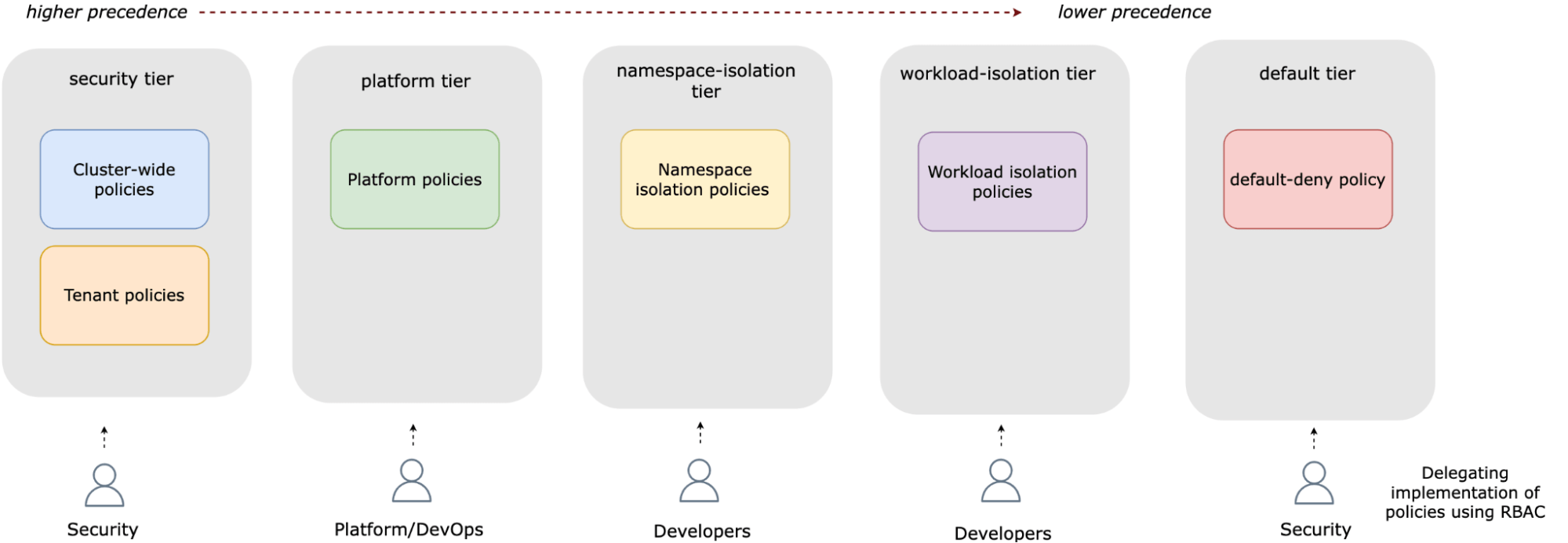
Once the domains are identified, the next step is to organize your policies into hierarchical tiers using Calico’s network policy framework. These tiers help prioritize security rules, ensuring that critical, cluster-wide policies take precedence over more specific, granular controls. This tiered structure not only enhances governance but also allows different teams to manage their responsibilities effectively without compromising the overall security posture.
Interactive learning video: A Policy Model with Calico Network Policy Tiers
Define NetworkPolicy Standards
The final step is to set clear security standards for each type of policy. These standards guide the types of policies that can be implemented across your domains and tiers, ensuring everything is consistent, compliant, and aligned with your organization’s goals. Defining a policy standard for each tier ensures consistency, reduces complexity, and provides a robust, scalable security posture. You can also adjust the level of detail for each security domain or policy based on specific security requirements. By defining these standards, you build a strong and flexible security framework that can handle the security challenges of operationalizing your Kubernetes environment. Some examples of policies that can be implemented for each of the domains discussed above are shown in the diagram below.

Interactive learning video: Defining NetworkPolicy Standards
Network Policy Standards
Cluster-wide Policies
Cluster-wide policies are broad security measures applied across the entire Kubernetes cluster, ensuring consistent protection and governance. These policies are crucial for enforcing high-level security controls that affect all workloads, regardless of their specific domains or namespaces.
For example, a denial list based on threat feeds might be implemented to block traffic from known malicious IP addresses or domains across the cluster. This ensures that no workloads can communicate with potentially harmful external entities, enhancing overall security.
SSH restrictions could be another cluster-wide policy, where SSH access is tightly controlled or entirely blocked, reducing the risk of unauthorized access or potential security breaches.
Additionally, global internet access policies could be put in place to control which parts of the cluster can access the internet. This might involve restricting outbound traffic to only essential services or allowing internet access only to specific, trusted destinations. These cluster-wide policies are fundamental in maintaining a secure, controlled, and compliant Kubernetes environment.

Interactive learning video: Cluster-wide Policy
Tenant-isolation Policies
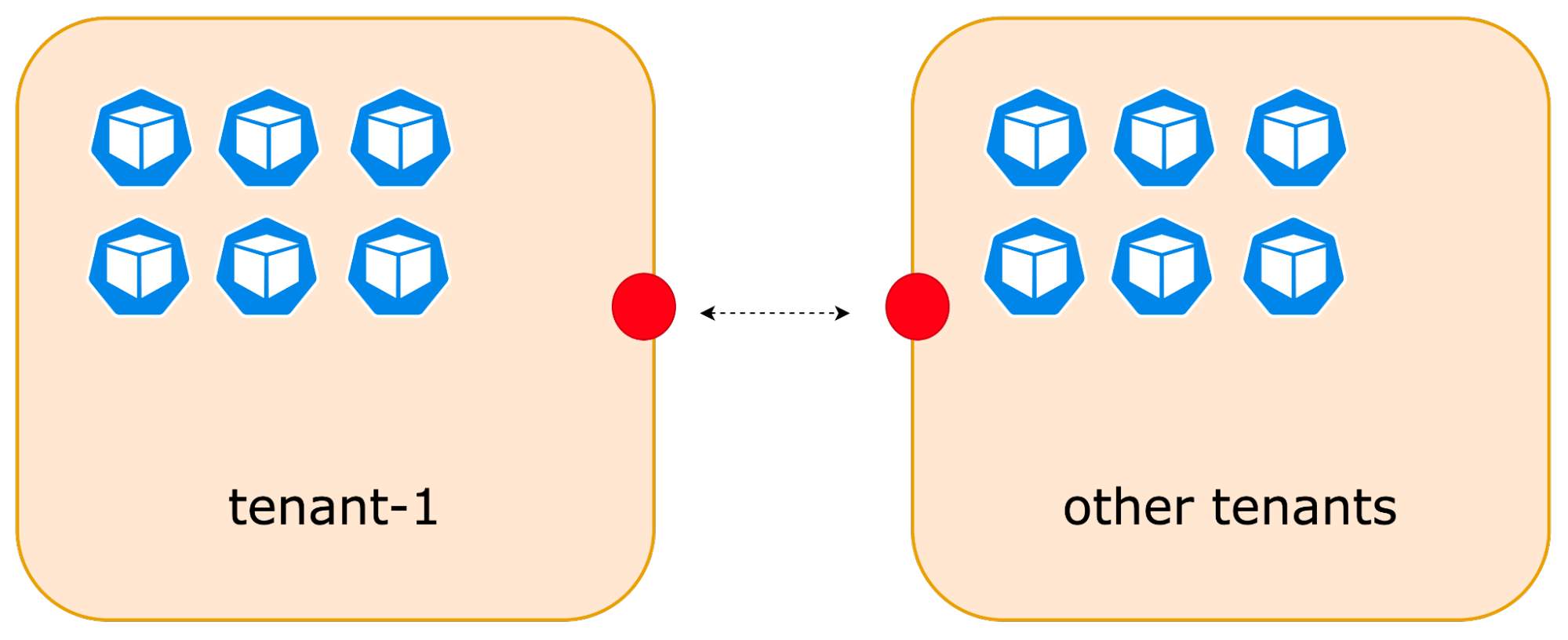
In the context of a multi-tenant environment, where multiple customers, business units, or departments share the same Kubernetes infrastructure, tenant policies play a crucial role in ensuring that each tenant operates independently and securely within their own isolated space.
For instance, isolating customers involves setting up policies that prevent one customer’s workloads from interacting with another. This ensures data privacy and security, as each customer’s data and services are confined to their own designated namespaces or resources protected by policies. Tenant policies may enforce strict boundaries so that no communication, even accidental, occurs between tenants, protecting sensitive information and maintaining regulatory compliance.
Similarly, isolating business units within an organization ensures that different departments can operate their applications without interference from others. For example, client or consumer facing applications might be kept separate from backend services. Furthermore, such policies can also be used to isolate environments such as staged, dev, preprod, etc. if they are deployed in the same cluster.
By implementing tenant policies, organizations can effectively manage and secure a shared Kubernetes environment, ensuring that each tenant or business unit has the autonomy and protection necessary to operate safely within the same cluster.
Interactive learning video: Tenant-isolation Policy
Platform Policies
Platform policies are critical security measures that focus on securing the control plane components and shared services in a Kubernetes cluster. These policies are essential for maintaining the security, stability, and reliability of the cluster’s infrastructure, as they safeguard the components that all workloads depend on. Some example platform policies include:
- Security Cluster DNS – Kubernetes uses a DNS service to perform internal service discovery and name lookups for external services. Ensuring the security of the DNS service is crucial because any compromise could lead to traffic being redirected to malicious endpoints or cause disruptions in service communication. Platform policies for DNS might include restricting which DNS service pods can use to send queries and controlling which external DNS servers can be used for forwarding DNS lookups.
- Securing the Kubernetes API – The Kubernetes API server is the control center of the cluster, and securing it is crucial because unauthorized access could compromise the entire cluster. Platform policies should include network policies that restrict access to the API server to only trusted sources.
- Ingress and Egress Traffic – Securing ingress (incoming) and egress (outgoing) traffic using network policies is crucial in maintaining the overall security of a Kubernetes cluster. These policies play a key role in controlling how traffic flows in and out of the cluster, ensuring that only authorized communication occurs between services, applications, and external entities.

Interactive learning video: Platform Policy
Namespace-isolation Policies
A namespace isolation policy in Kubernetes is designed to control and secure the interactions between different application namespaces within a cluster. This policy ensures that each namespace, which may represent a different application, team, or environment, operates independently, with clear boundaries defining what communication is allowed between namespaces and external services.
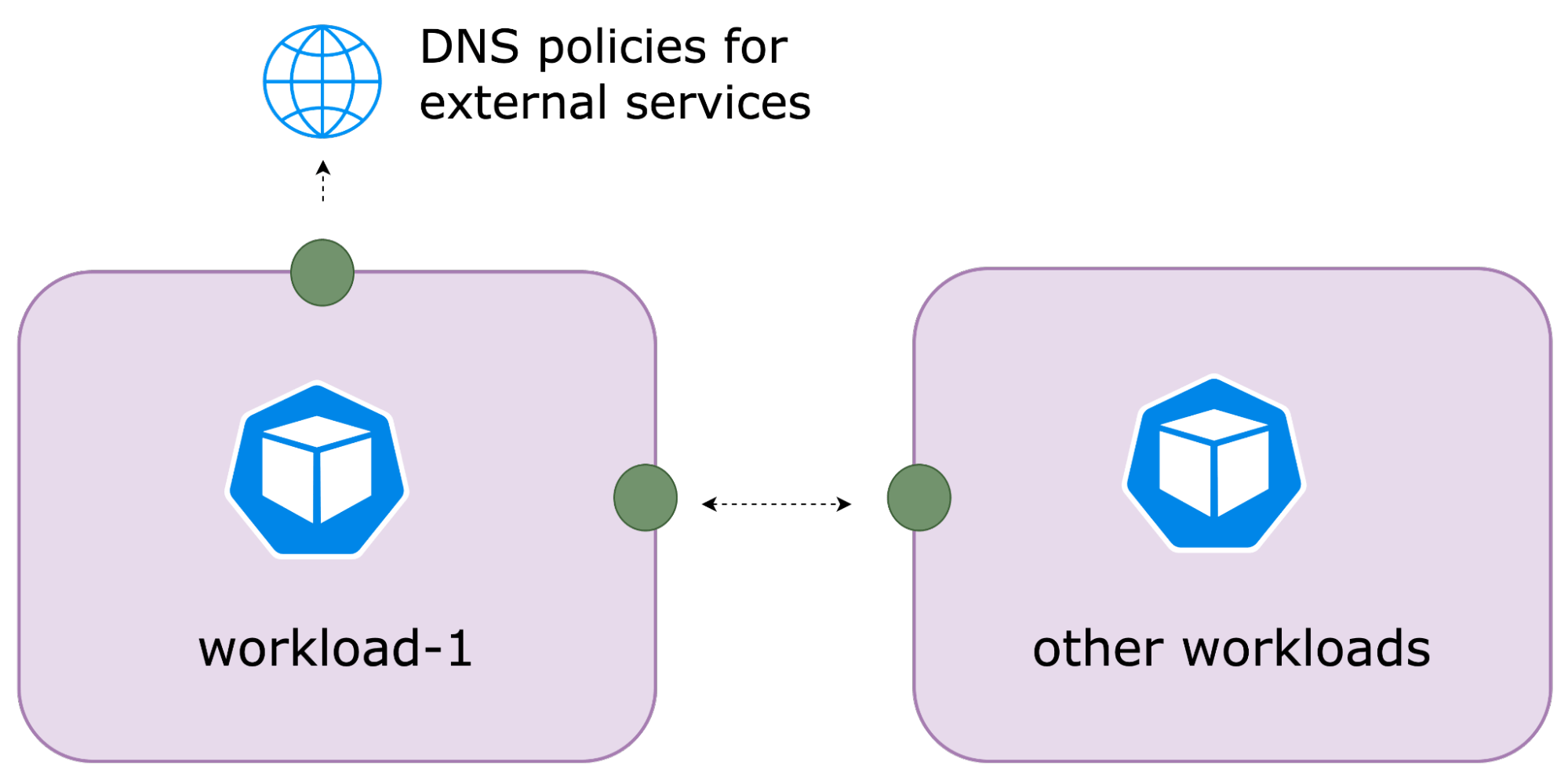
Within a namespace, communication flows between resources like pods and services are generally permitted, allowing the application components to function as intended. However, even within a namespace, this communication can be further controlled by creating granular rules in the policy. Namespace isolation policies can also include DNS rules that control how resources within a namespace resolve and connect to external services. These rules determine which external services (outside the Kubernetes cluster) can be accessed by workloads within the namespace. By defining these DNS rules, you ensure that workloads can only communicate with approved external services, further protecting the namespace from accessing malicious or untrusted endpoints

Interactive learning video: Namespace-isolation Policy
Workload-isolation Policies
A workload isolation policy in Kubernetes is designed to control and secure the interactions between different workloads (such as pods or services) within the cluster, even if those workloads are within the same namespace. This policy ensures that each workload only communicates with other workloads or external services when it is explicitly allowed, thereby reducing the risk of unauthorized access or unintended interactions. For example, in a microservices architecture, you might want to allow a frontend service to communicate with a middleware service, but prevent it from accessing other backend services. This intra-namespace isolation adds an extra layer of security, ensuring that workloads are only able to interact in ways that are explicitly defined.
Interactive learning video: Workload-isolation Policy
Default Deny Policies
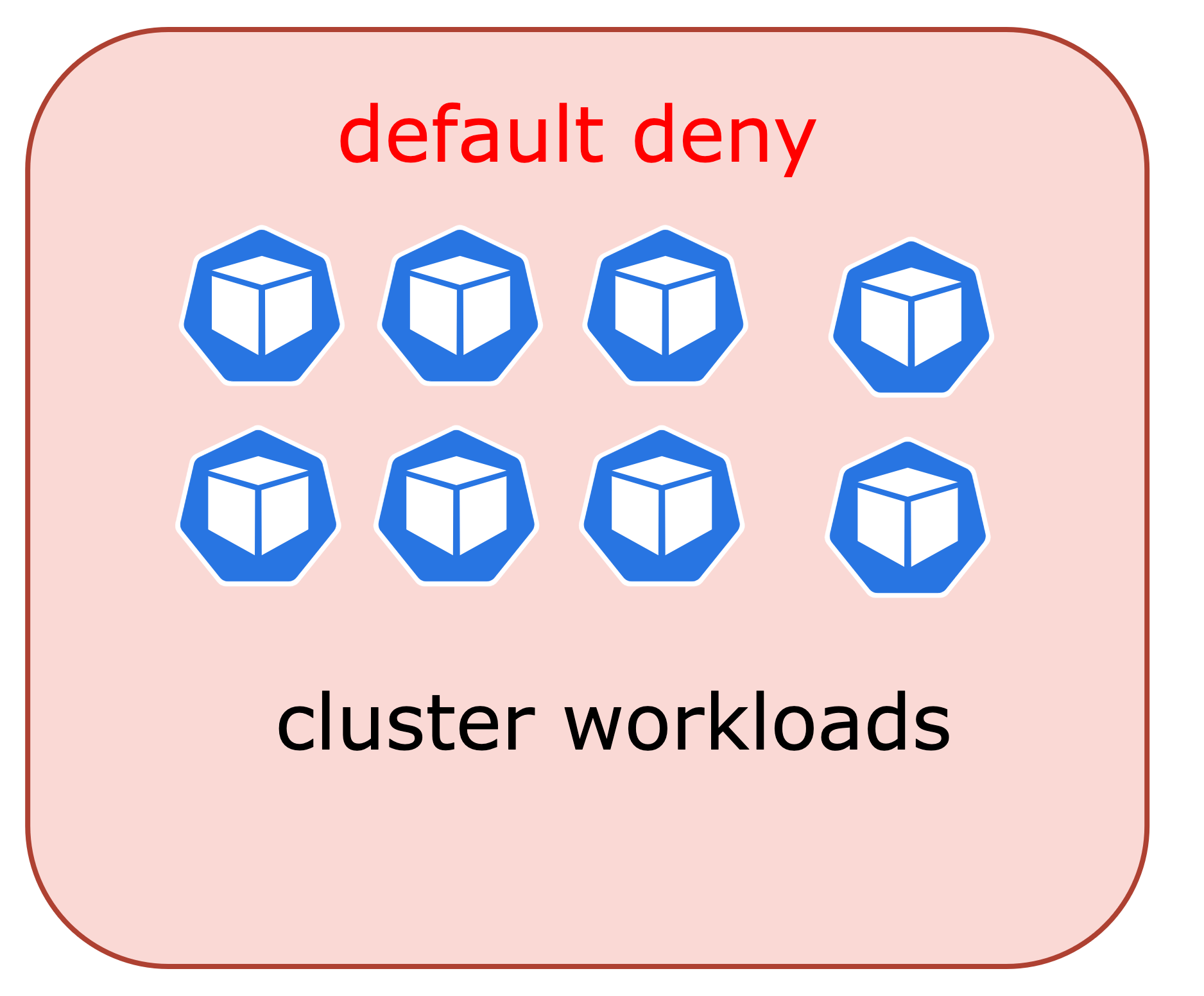
A default deny policy in Kubernetes is designed to ensure that no network traffic is allowed unless it is explicitly permitted by previous policies. This policy acts as a safety net, blocking all communication flows that haven’t been explicitly authorized, thereby minimizing the risk of unauthorized access or unintended interactions within your cluster.
Default deny policies can be layered or “stacked” at different levels of your Kubernetes environment, providing granular control over traffic. For example:
- Default-Deny for a Tenant: You can apply a default deny policy at the tenant level, ensuring that all network traffic within a tenant’s resources is denied unless explicitly allowed. This is particularly useful in multi-tenant environments where different customers or business units share the same cluster but need strict isolation.
- Default-Deny for a Namespace: You can enforce a default deny policy at the namespace level, blocking all traffic within a namespace unless specific policies allow it. This ensures that only necessary communications occur within that namespace, protecting sensitive workloads from unauthorized access.
- Default-Deny for All Cluster Workloads: At the highest level, a default deny policy can be applied to the entire cluster, ensuring that no communication between any workloads is allowed unless permitted by prior policies. This creates a strong security baseline for the entire cluster.
Interactive learning video: Default Deny Policy
Summary
A hierarchical policy model plays a vital role in the successful implementation of microsegmentation in Kubernetes by addressing key challenges and requirements. It not only ensures alignment with compliance standards but also provides a structured approach to managing and scaling security efforts across the organization. Here are some of the primary benefits of adopting such a model:
- Initial Setup and Configuration: A policy model ensures seamless microsegmentation implementation by providing a structured framework for consistent, phased deployment across environments. This approach ensures efficient scaling and uniform policy application without disrupting workloads.
- Policy models meet compliance and organizational requirements: A hierarchical policy model ensures that security policies for microsegmentation align with compliance regulations and organizational objectives.
- Breaking down complex tasks: The model helps divide the challenging task of microsegmentation into manageable domains, allowing for a phased approach to implementation.
- Alignment with governance structures: The model stipulates roles and responsibilities, ensuring teams are aligned on who implements what policies at different stages, fostering effective collaboration.
- Consistency and fault tolerance: It ensures consistent application of security policies across environments, preventing misconfigurations from impacting the entire system by limiting the scope of potential errors.
- Scalability and demonstration of value: The policy model supports GitOps-based workflows and DevSecOps practices, enabling scaling while also helping to showcase operational effectiveness and compliance to management.
- Resources and Skills Requirements: A policy model reduces resource burden by providing reusable, predefined policies that minimize manual effort and specialized expertise. It simplifies management and automates enforcement, cutting down on troubleshooting and rework.
Want to learn more? Take a look at our interactive training videos.


Join our mailing list
Get updates on blog posts, workshops, certification programs, new releases, and more!