






What Is Istio?
Istio is an open-source service mesh platform that layers transparency over existing distributed applications. It provides a standard way to secure, connect, and observe microservices. With Istio, developers can focus on building business logic while the platform handles communication and security.
As applications grow more complex and involve several microservices, managing them becomes a challenge. Istio simplifies microservices management by providing a uniform way to integrate them, controlling how microservices communicate. By abstracting traffic management policies and monitoring, it helps improve the reliability of microservice architectures.
In this article:
Key Features of Istio
Traffic Management
Traffic management in Istio enhances the control over the flow of network traffic. It allows fine-tuned control over various aspects, such as routing, load balancing, and failure handling. By defining service-level rules, operators can configure how traffic should traverse the service mesh and react to network conditions.
Traffic management features include weighted load balancing, which helps distribute traffic across services according to defined parameters. With a routing API, Istio can create complex routing rules, allowing developers to redirect traffic, manage retries, or control timeouts easily. These features ensure that network traffic is both reliable and efficient.
Service Discovery
Service discovery in Istio enables interactions between services by automatically locating and resolving each service endpoint within the mesh. Istio abstracts the complexity of locating services, providing automatic discovery capabilities that simplify service-to-service networking and eliminate the need for manual round-robin configuration or hard-coded endpoints.
Istio supports dynamic service discovery, ensuring that changes in the network topology do not disrupt service connectivity. Services can be dynamically loaded as they become available, allowing greater flexibility in managing distributed applications. This feature is tightly integrated with load balancing to ensure balanced service requests across the available instances.
Security
Istio provides security features without requiring significant changes to application code. It secures service-to-service communication across the mesh with automatic mutual TLS encryption, ensuring the confidentiality and integrity of data in transit. It simplifies certificate management through automated issuance and rotation, reducing operational overhead.
Additionally, Istio implements authentication policies and fine-grained authorization mechanisms. By defining policies centrally, Istio ensures consistent security measures, minimizing the risk of breaches. Built-in support for JWT-based access control provides an additional layer of security, ensuring that only authorized users and services can access protected resources.
These mesh-level controls work best when paired with broader container security practices that protect workloads at the host, image, and runtime layers.
Teams evaluating a service mesh should also align it with their broader Kubernetes security strategy across the cluster.
Observability
Observability in Istio enables insights into the behavior of microservices within the mesh. It provides logging, tracing, and monitoring tools that enable the identification of performance bottlenecks and network issues. Metrics such as request latency, response codes, and traffic flow all contribute to a detailed understanding of service interactions.
Through integration with tools like Prometheus for monitoring, Grafana for visualization, and Jaeger for tracing, Istio supports analysis and visualization of telemetry data directly from the service mesh. This integration enables real-time monitoring of microservices, compliance tracking, and trend analysis of application performance.
Limitations of Istio
Istio also comes with some limitations that organizations should consider before adoption. These limitations were reported by users on the G2 platform:
- Complexity in setting up and managing the service mesh: Deploying Istio can be time-consuming, particularly in private clusters, such as Google Kubernetes Engine (GKE) environments with NAT gateways. This complexity requires a deep understanding of microservice architecture, which can be a barrier for teams lacking experience in distributed systems.
- Resource consumption: The platform offers a wide array of features, but adding these capabilities comes at a cost. The more features enabled, the more resources Istio uses, potentially increasing infrastructure costs.
- Limited ingress support: Istio currently supports only its own ingress controller, limiting flexibility in terms of compatibility with other ingress controllers. This can be a hindrance for organizations that already have established ingress solutions.
- Limited use cases: Istio does not work well with some more complex scenarios, such as managing direct IP connections with databases, which limits its use in certain architectures.
Related content: Read our guide to service mesh architecture
Notable Istio Alternatives
1. Calico Cloud

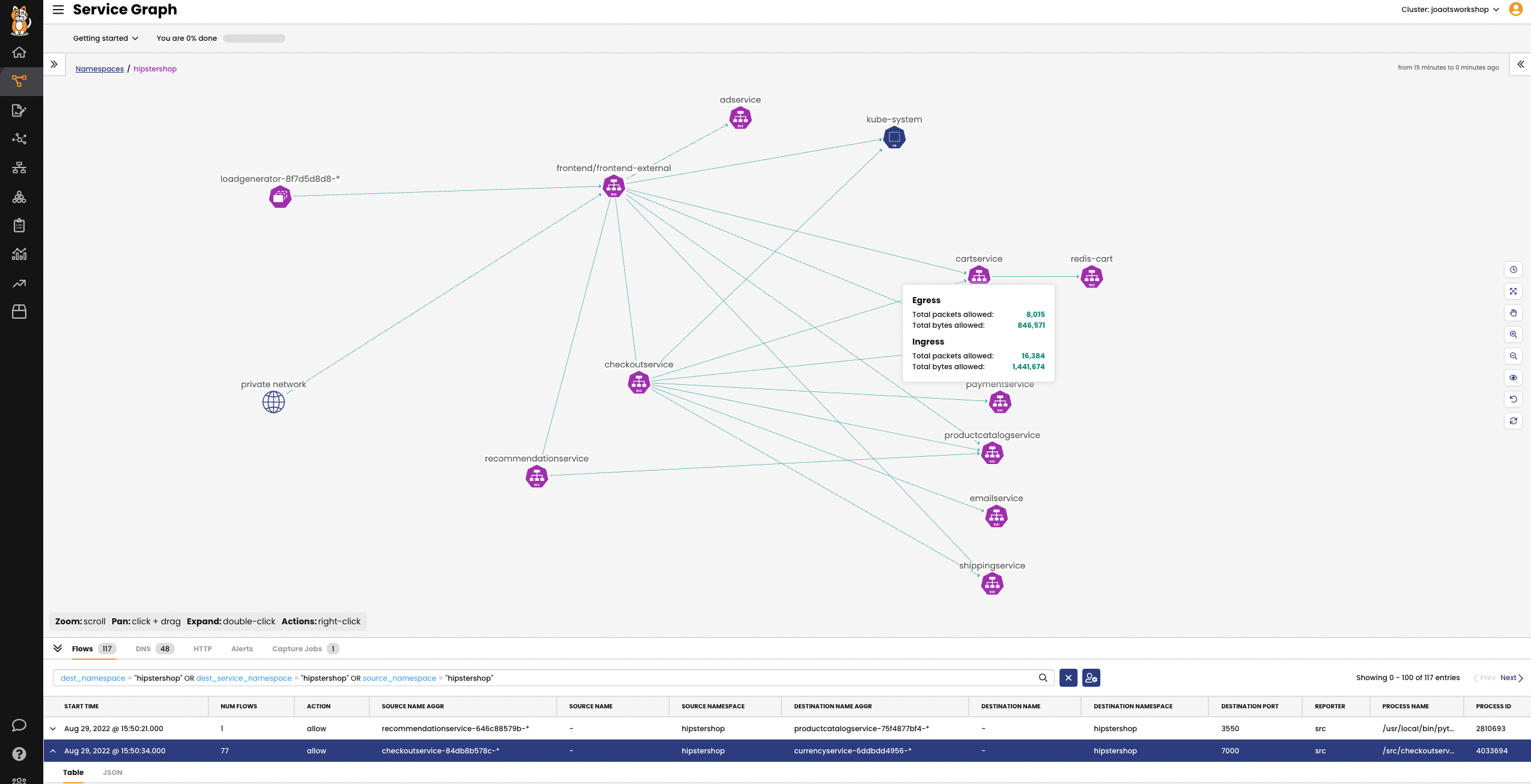
Calico Cloud enables a single-pane-of-glass unified control to address the three most popular service mesh use cases—security, observability, and control—with an operationally simpler approach, while avoiding the complexities associated with deploying a separate, standalone service mesh. With Calico, you can easily achieve full-stack observability and security, deploy highly performant encryption, and tightly integrate with existing security infrastructure like firewalls.
Calico Cloud is built on Calico Open Source, an open-source project available under Apache-2.0 license with over 1.6B Docker pulls, 6K GitHub stars, and 300+ contributors.
Calico Cloud offers robust features for container networking and network security in cloud-native applications:
- Egress Access Controls: Securely control workload access between Kubernetes clusters and external resources like APIs and applications.
- Identity-Aware Microsegmentation: Deploy scalable microsegmentation for hosts, VMs, containers, pods, and services across all environments.
- Egress Gateway: Integrate Kubernetes resources with your firewall, extending firewall management to cloud-native architecture.
- Encryption: Utilize WireGuard for data-in-transit encryption, offering better performance and lower CPU utilization than traditional protocols.
- Dynamic Service and Threat Graph: Visualize traffic flow and policies, filter resources, and troubleshoot service issues.
- Policy Lifecycle Management: Create, test, deploy, and manage security policies with ease, enforcing hierarchical policy tiers and real-time evaluations.
- Cluster Mesh: Extend container networking for seamless service-to-service connectivity across clusters. Discover and secure services across clusters while enforcing network security. Additionally, observe and troubleshoot connectivity and security issues effectively.
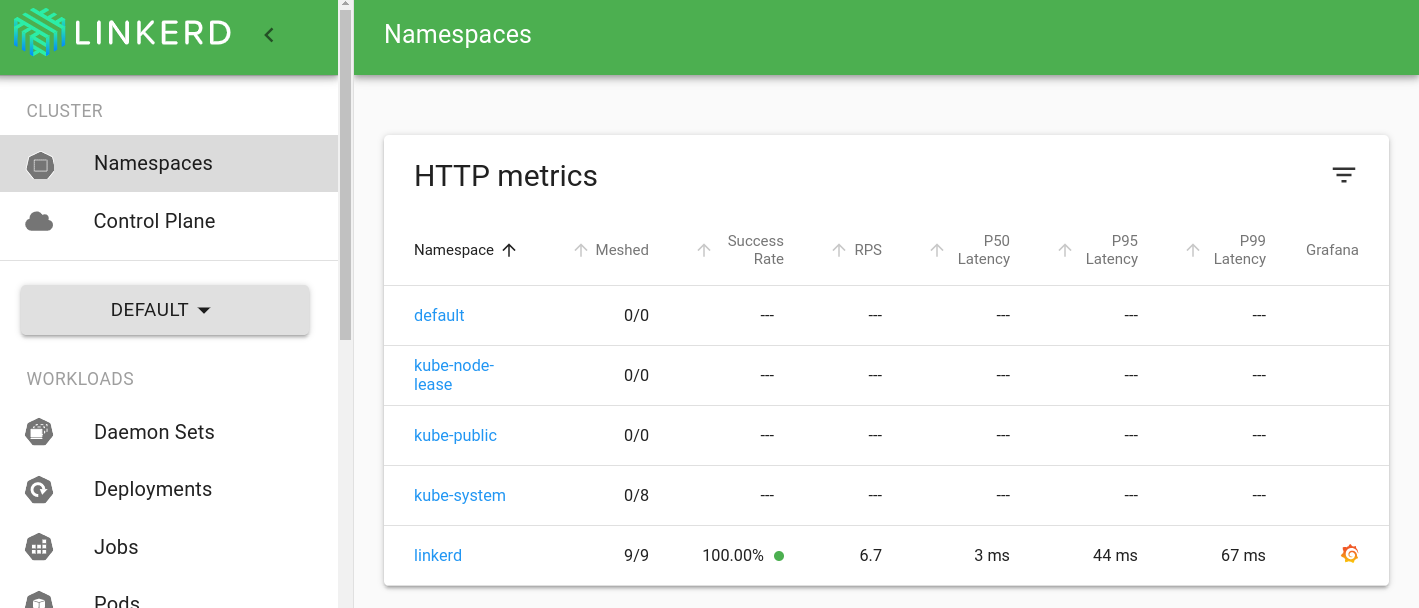
2. Linkerd

Linkerd is an open-source service mesh for Kubernetes environments. It enhances service reliability, security, observability, and runtime debugging without requiring code changes. Linkerd achieves this by deploying lightweight, Rust-based micro-proxies alongside each service to manage traffic flow transparently. These proxies handle metrics, load balancing and retries while communicating with a centralized control plane.
Linkerd is a project of the Cloud Native Computing Foundation, available under Apache-2.0 license with over 10K GitHub stars and 360 contributors on GitHub.
Key features of Linkerd:
- Authorization policy: Restricts traffic between meshed services.
- Automatic mTLS: Ensures mutual TLS encryption for service communication.
- Automatic proxy injection: Automatically injects proxies into pods based on annotations.
- CNI plugin: Uses a CNI plugin to avoid needing NET_ADMIN privileges.
- Dashboard and metrics stack: Provides metrics and dashboard tools for monitoring.
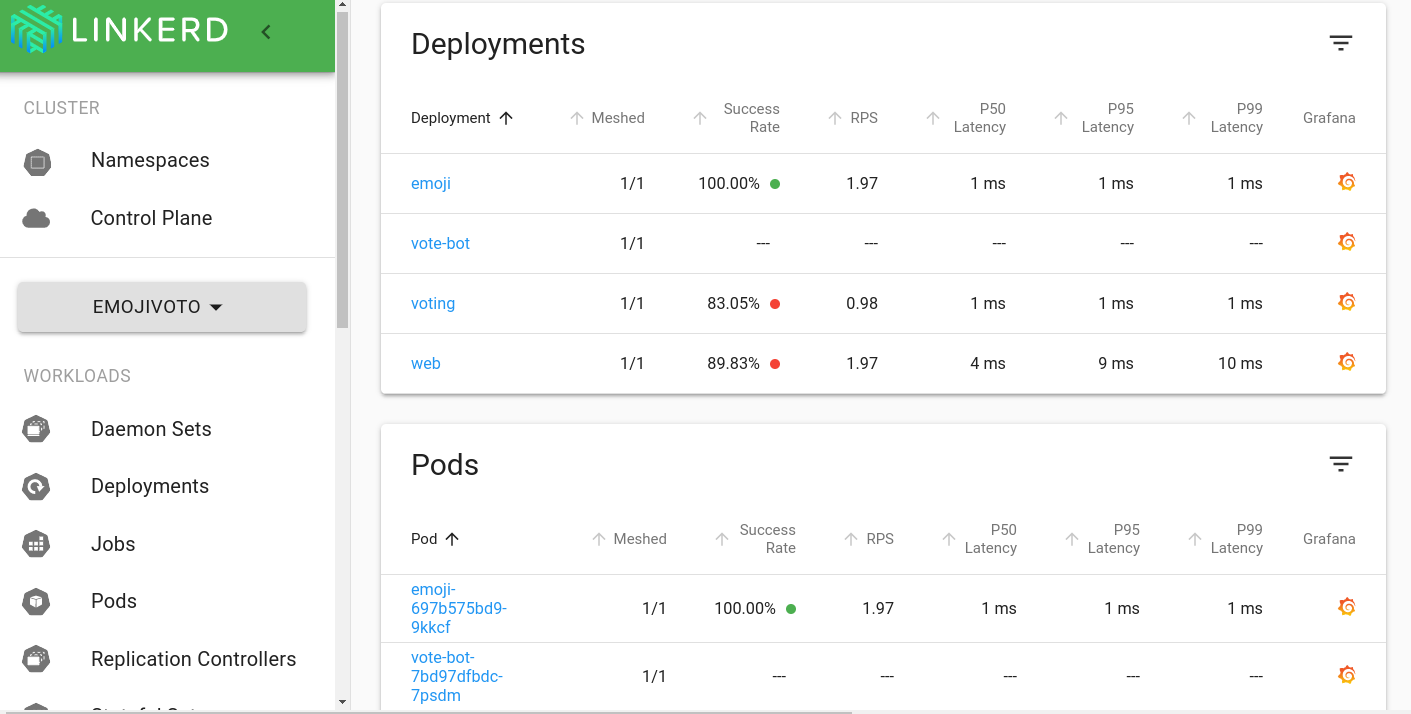
Source: Linkerd
3. Consul Connect

Consul Connect is a service mesh solution integrated with HashiCorp’s Consul, used to secure and manage service-to-service communication in a distributed network. By using mutual Transport Layer Security (mTLS), Consul Connect enables automatic encryption and authorization between services without requiring changes to the application code.
Consul is open-sourced under the Business Source License (BSL), with over 28K stars and more than 900 contributors on GitHub.
Key features of Consul Connect:
- Mutual TLS encryption: Secures service-to-service communication with automatic mTLS.
- Identity-based authorization: Uses service identity rather than IP addresses to enforce access control with “intentions.”
- Sidecar proxy support: Enables applications to establish secure connections without awareness of the service mesh.
- Native integration: Allows applications to natively integrate with Consul Connect for optimized security and performance.
- Network-agnostic access control: Works across physical networks, cloud networks, and cross-cloud environments.
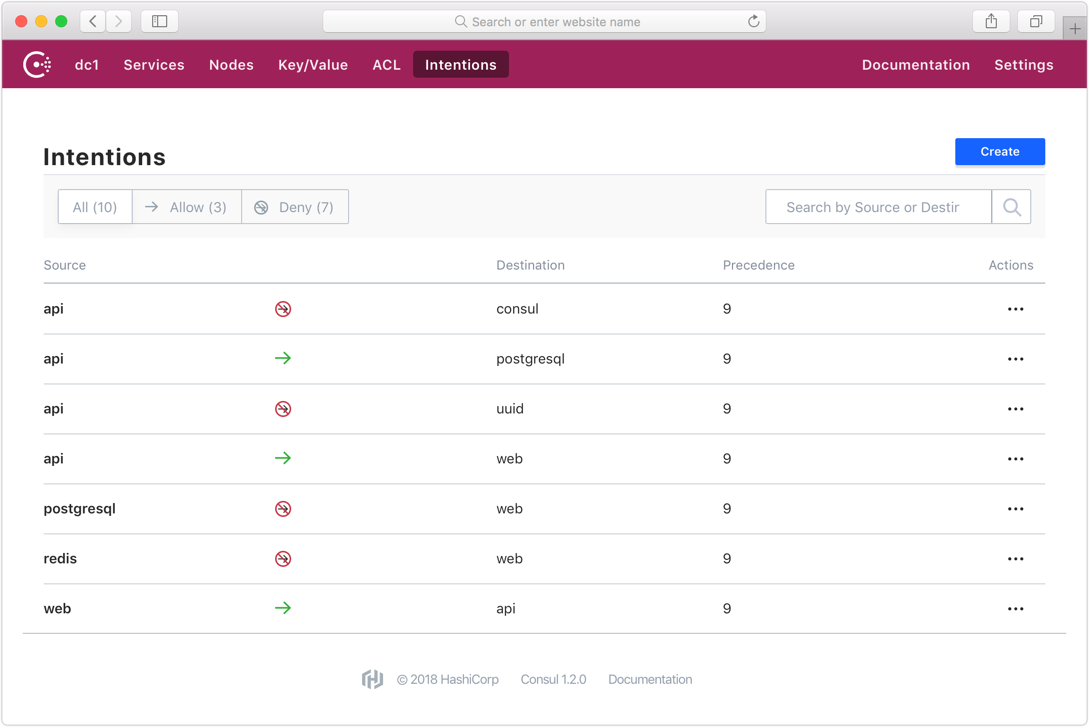
Source: HashiCorp
4. Traefik Mesh

Traefik Mesh is a lightweight, open-source service mesh to simplify the management of service-to-service communication within Kubernetes clusters. Built on top of Traefik Proxy, it provides visibility, security, and traffic control without the complexity of traditional service meshes.
Traefik is available under the Apache-2.0 license and has 2K stars on GitHub.
Key features of Traefik Mesh:
- Observability: Supports OpenTracing and integrates with Prometheus and Grafana for metrics and monitoring.
- Traffic management: Offers features like load balancing, retries, failovers, circuit breakers, and rate limiting for traffic control.
- Protocol support: Compatible with HTTP, HTTPS, HTTP/2, gRPC, WebSockets, and TCP traffic, providing versatile routing options.
- Security & safety: SMI-compliant with built-in access controls to manage resource access securely.
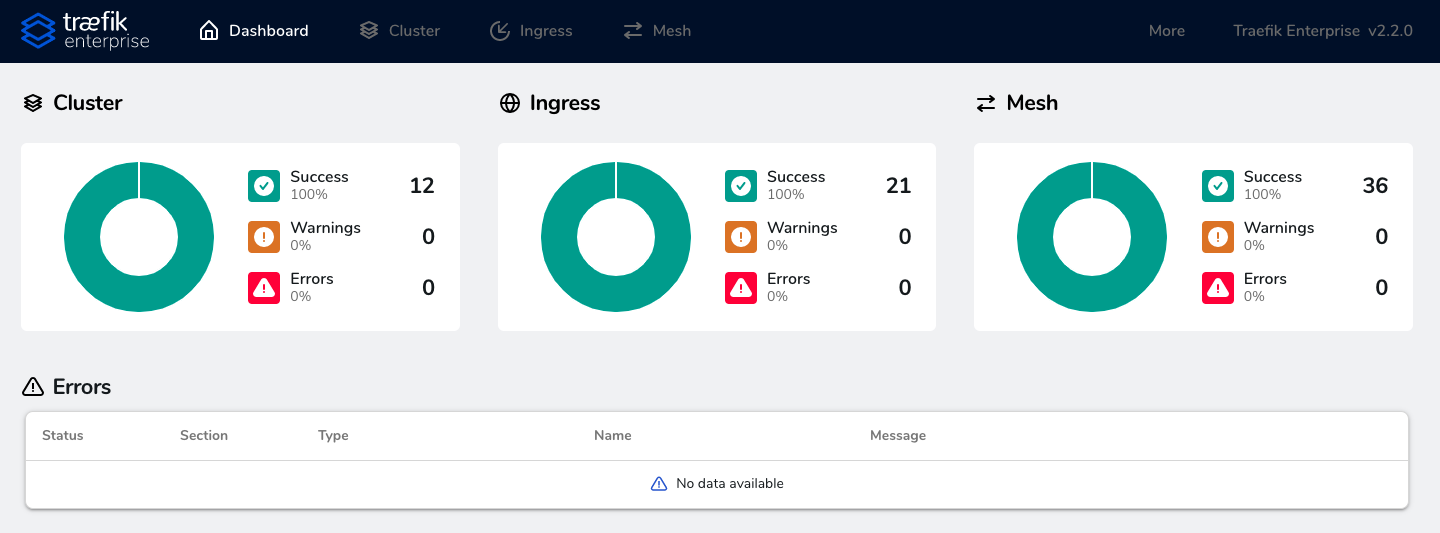
Source: Traefik
5. Gloo Mesh

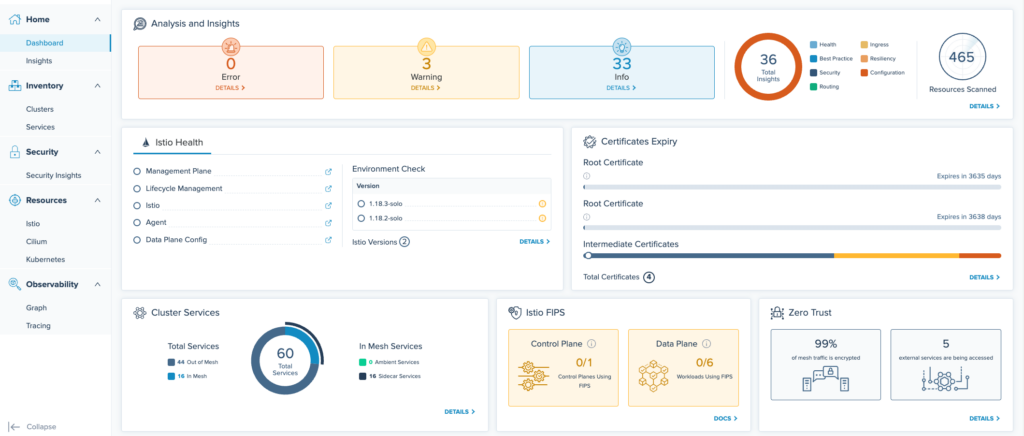
Gloo Mesh is an enterprise-grade service mesh management platform built on Istio, which helps simplify the operation of multi-cluster and multi-cloud Kubernetes environments. It provides centralized control over security, traffic management, and observability across containerized and virtual machine workloads.
Key features of Gloo Mesh:
- Multi-cloud and multi-cluster management: Simplifies service mesh operations across multiple cloud providers and Kubernetes clusters, ensuring consistency and resilience.
- mTLS for security: Automatically secures service-to-service and pod-to-pod communication using mutual TLS (mTLS), establishing zero-trust security.
- Traffic management: Offers traffic control features like content-based routing, traffic shifting, timeouts, and circuit breaking for improved application performance.
- Istio lifecycle management: Provides tools to manage Istio’s lifecycle, ensuring updates and configuration across clusters.
- Observability and telemetry: Integrates with OpenTelemetry, providing metrics and insights through dashboards for monitoring service health.
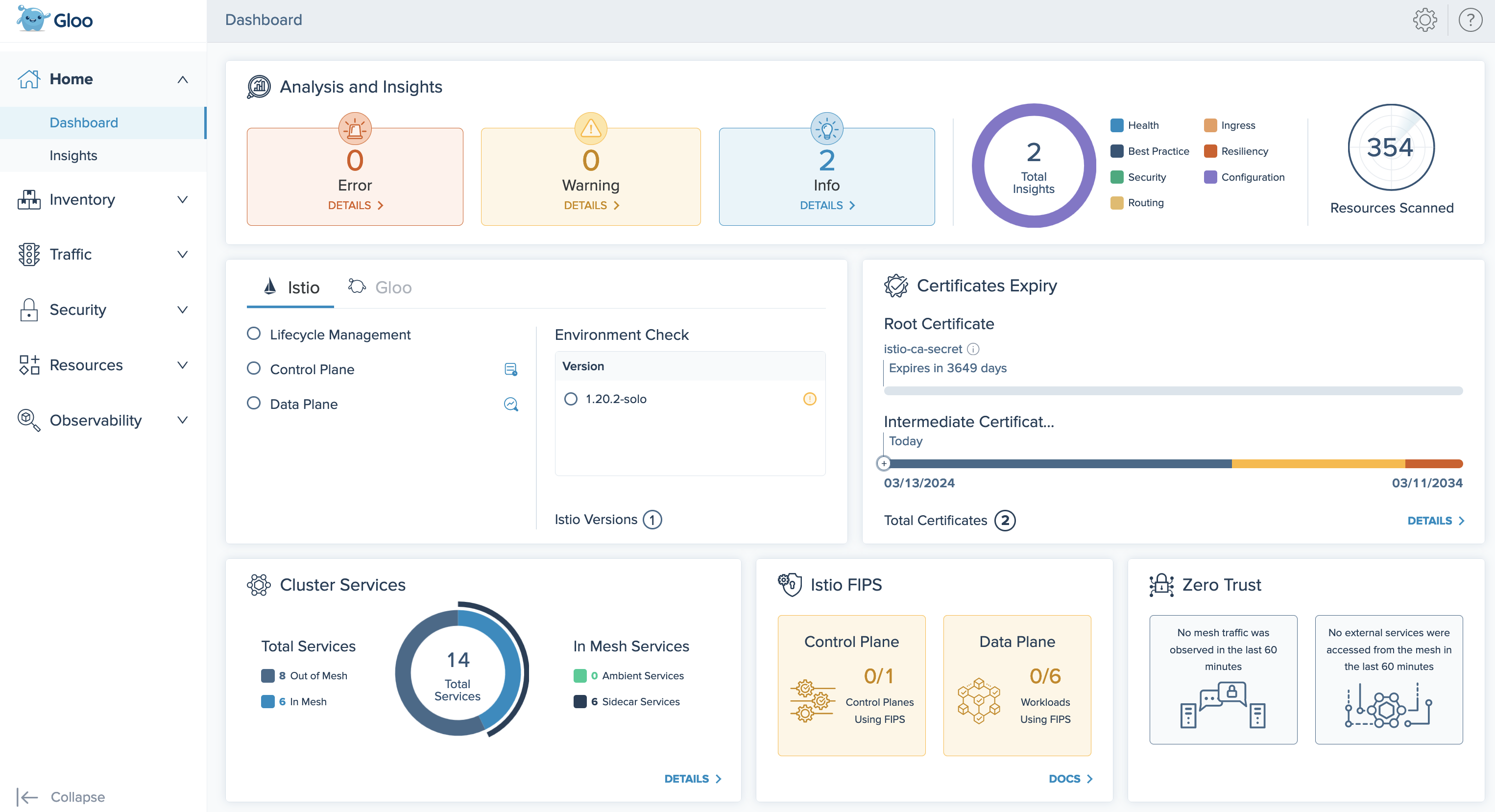
Source: Solo
6. Kong Mesh

Kong Mesh is another enterprise-grade service mesh that simplifies the management, security, and connectivity of services across any environment, including Kubernetes, cloud, on-premises, containers, and virtual machines. It centralizes control over service-to-service communication while enforcing security, observability, and governance.
Key features of Kong Mesh:
- Zero-trust security: Provides built-in authentication, authorization, and encryption to enforce zero trust security across all service mesh environments with minimal configuration.
- Centralized control: Enables one-click management of security, traffic control, and observability policies across all services from a unified control plane.
- Flexible deployment: Supports running on Kubernetes, in the cloud, on-premises, or on virtual machines, offering flexibility for any infrastructure.
- Resilience and failover: Ensures high uptime and reliability with features like intelligent load-balancing, circuit breakers, and smooth, disruption-free upgrades.
- Observability: Offers real-time insights into service performance, including metrics for latency, error rates, and security posture.

Source: Kong Mesh
7. F5 Distributed Cloud Mesh

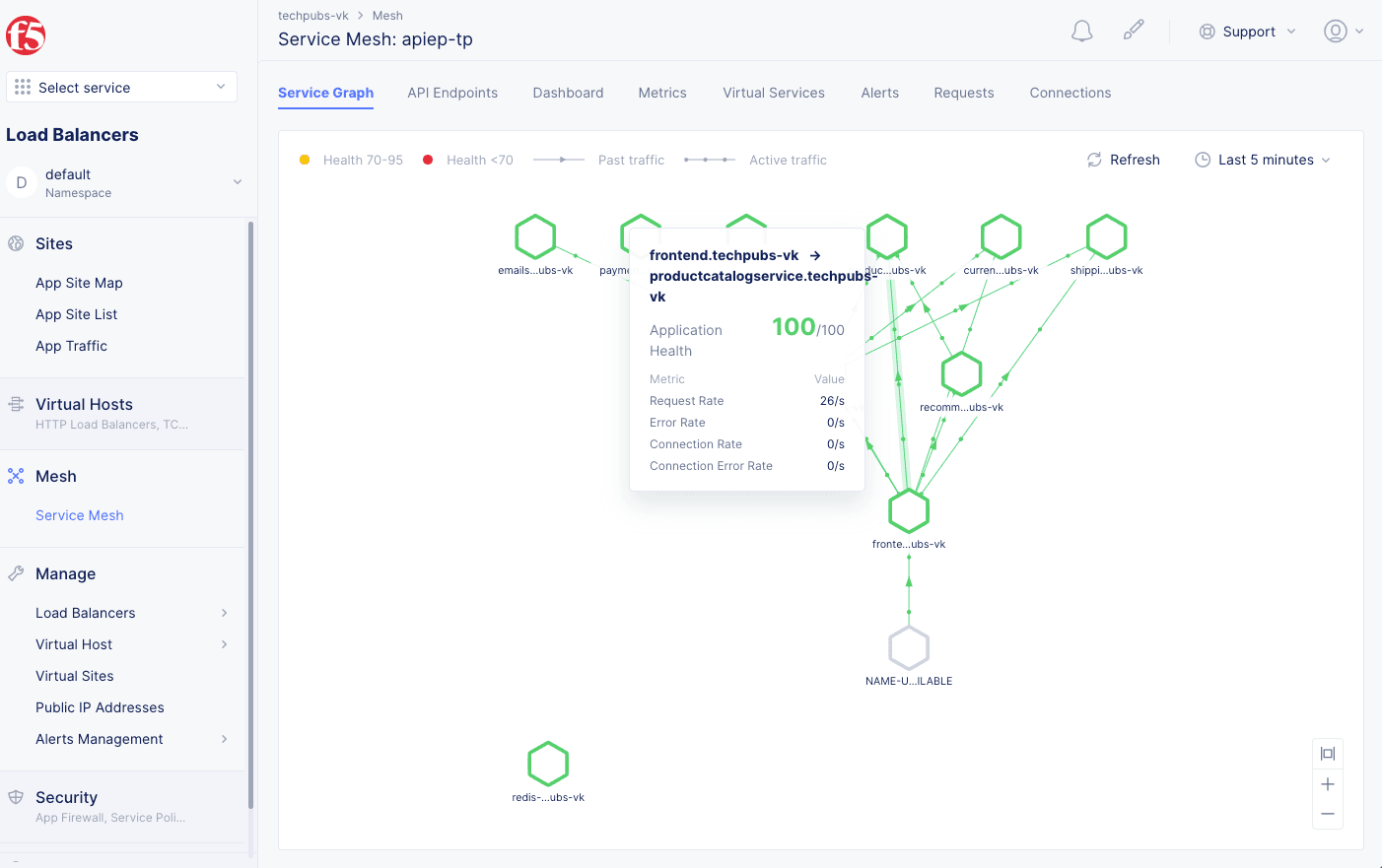
F5 Distributed Cloud Mesh is a service mesh platform that connects, secures, and manages applications across multiple cloud environments, edge sites, and on-premises locations. It offers a zero-trust architecture that enables secure application access without direct network connectivity between clusters.
Key features of F5 Distributed Cloud Mesh:
- Zero-trust architecture: Provides secure application access without network-level connectivity across clusters and sites, ensuring application security through mutual TLS (mTLS) and policy-based authorization.
- Global secure backbone: Utilizes F5’s multi-terabit private network for deterministic, high-performance connectivity across clouds, edge, and the Internet, with features like DDoS protection and firewall capabilities.
- Flexible deployment: Supports deployment across cloud, on-premises, and edge environments through F5 Distributed Cloud Nodes, managed centrally via the F5 Distributed Cloud Console.
- Load balancing and service mesh: Offers traffic management capabilities, including service discovery, health checks, microsegmentation, and ingress/egress load balancing, with integrated support for Kubernetes, Consul, and DNS registries.
- API proxy and traffic control: Offers an API proxy with support for API-level authentication, rate-limiting, canary deployments, and fault injection.
Source: F5
8. Google Cloud Service Mesh

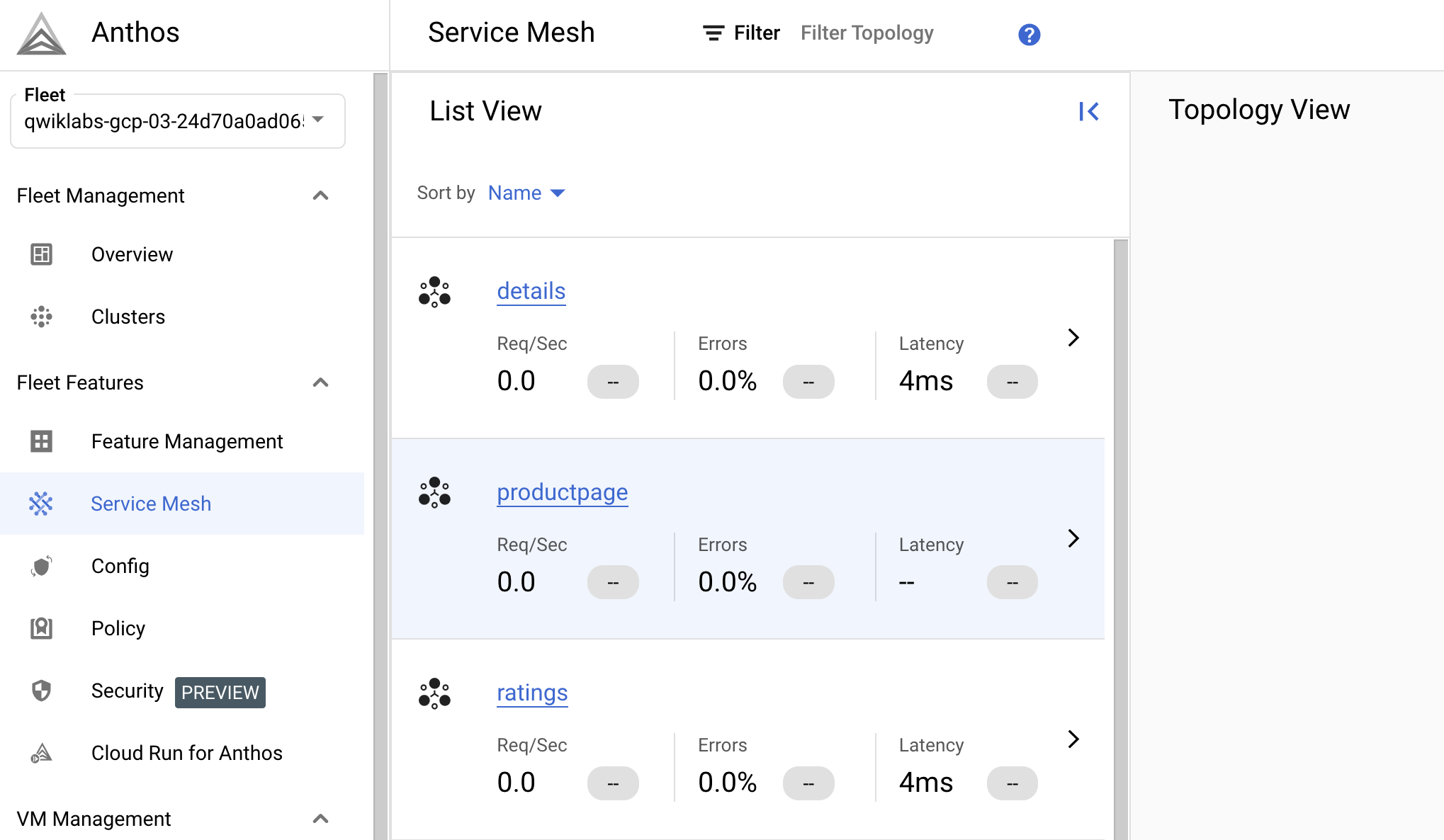
Cloud Service Mesh (formerly Anthos) is a fully managed service mesh offering from Google Cloud, which operates across Google Cloud and GKE Enterprise platforms. It provides secure and observable communication between services, using APIs tailored to Google Cloud and open-source environments.
Key features of Cloud Service Mesh:
- Traffic management: Controls traffic between services, including ingress, egress, and internal routing. Features include service discovery, load balancing, and routing strategies like canary and blue-green deployments.
- Observability insights: Automatically collects and displays metrics, logs, and traces for HTTP traffic in GKE clusters via Google Cloud’s observability tools, such as Cloud Monitoring and Cloud Logging.
- mTLS encryption: Ensures end-to-end encryption in transit using mutual TLS for authentication and secure communication between services.
- Identity-based security: Protects sensitive data and mitigates unauthorized access by enforcing identity-based authorization, irrespective of network location.
- Service dashboards: Preconfigured dashboards provide insights into service health, relationships, and communication security posture.
Source: Google
9. AWS App Mesh

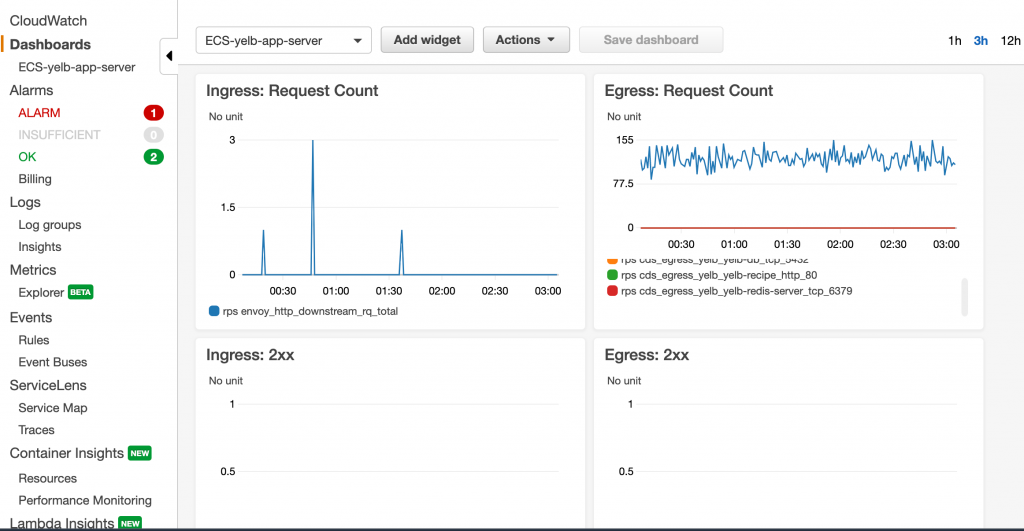
AWS App Mesh is a fully managed service mesh that simplifies the monitoring and control of service-to-service communication across applications. By using lightweight network proxies, App Mesh standardizes communication, providing consistent visibility, traffic management, and high availability for services.
Key features of AWS App Mesh:
- Service mesh: Establishes a logical boundary for managing traffic between services within a mesh, ensuring controlled and secure communication.
- Virtual services: Provides an abstraction layer for services, allowing them to communicate using familiar service discovery names even after App Mesh is implemented.
- Virtual nodes: Acts as logical pointers to discoverable services, enabling traffic to be routed based on service discovery configurations.
- Virtual routers and routes: Handles traffic routing within the mesh, allowing dynamic traffic distribution to virtual nodes based on HTTP headers, URL paths, or gRPC methods. Supports features like traffic shifting and retries.
- Proxy integration: Uses Envoy proxies to manage all communication between services, ensuring controlled traffic flow without modifying the application code.
Source: Amazon
10. HAProxy

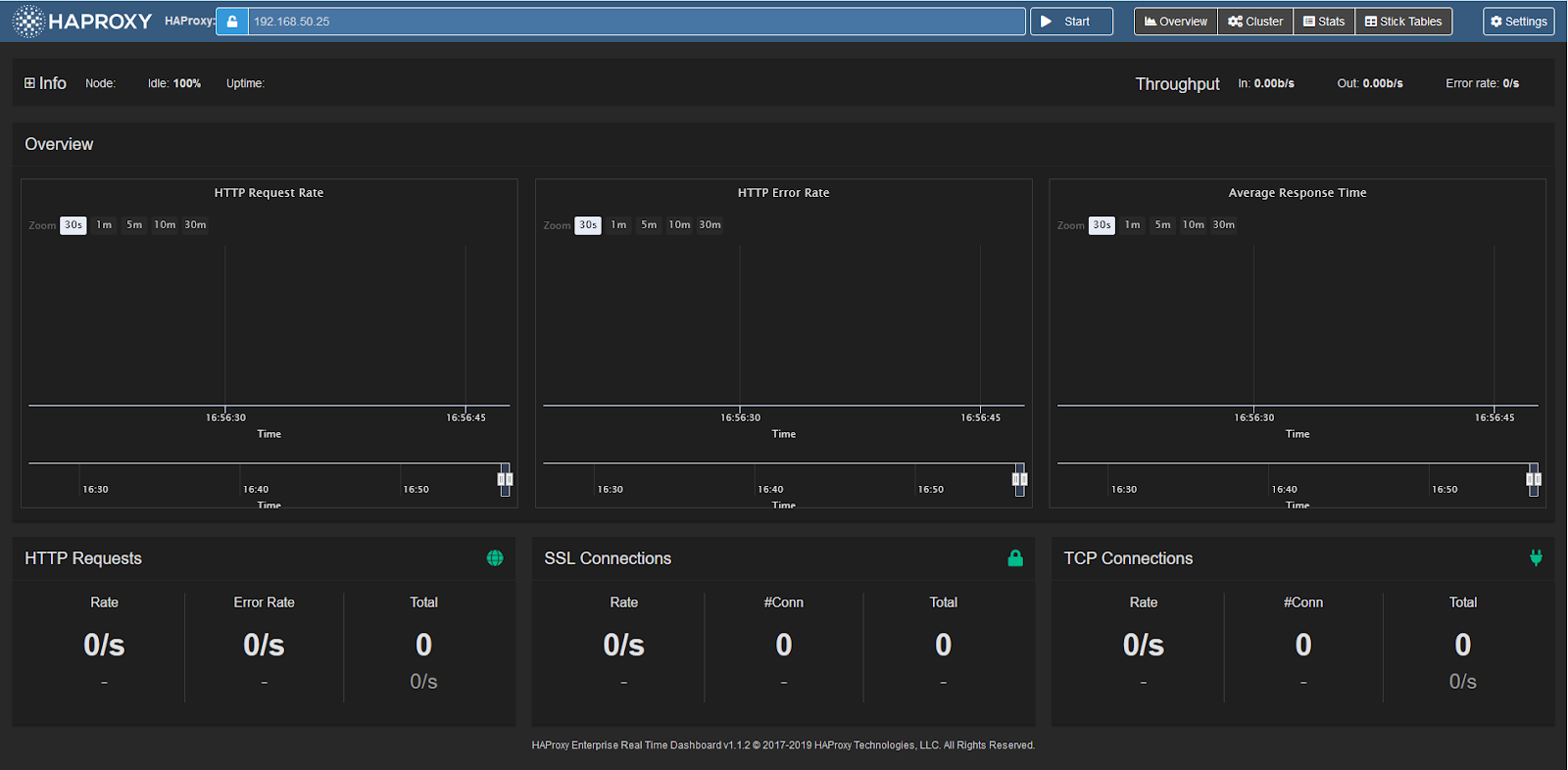
HAProxy is an open-source reverse proxy and load balancer that provides solutions for high availability, load distribution, and TCP/HTTP proxying. It does not offer full service mesh capabilities but can be used as a partial service mesh solution. It is suitable for handling large traffic loads, and is often shipped with major Linux distributions and deployed in cloud environments.
HAProxy has approximately 5,000 stars on GitHub, with over 250 contributors. Its license is based on the GPL v2 and LGPL licenses.
Key features of HAProxy:
- High availability: Ensures continuous service uptime through load balancing and failover mechanisms.
- Load balancing: Distributes traffic across multiple servers to optimize performance and resource usage.
- TCP and HTTP proxying: Supports both TCP and HTTP connections, allowing flexible proxy configurations.
- Long-term support (LTS): Offers LTS versions maintained for 5 years, providing stability for critical production environments.
- Security-hardened by default: Implements strong security practices, such as chroot, privilege drops, and strict protocol validation to mitigate attacks.
Source: HAProxy
Conclusion
Istio can aid in simplifying microservices management by offering standardized solutions for traffic management, service discovery, security, and observability. However, its complexity and resource demands make it more suitable for larger-scale applications with advanced operational capabilities. For smaller-scale environments, alternative service mesh solutions may offer more appropriate approaches to managing service-to-service communication.