What Are Service Mesh Solutions?
Service mesh solutions manage interactions between microservices within a distributed application. They provide a dedicated infrastructure layer to handle service-to-service communications, ensuring reliable, secure, and observable connections.
As distributed architectures become more complex, service meshes offer a centralized way to manage networking across multiple services without modifying the application code. By abstracting the complexities of communication, service meshes simplify tasks like traffic management, observability, security, and fault tolerance.
This abstraction enables developers to focus on building features rather than managing infrastructure. Service mesh solutions are particularly useful for managing microservices environments where service discovery, load balancing, and retries are essential for maintaining systems.
Many teams adopt a service mesh Kubernetes deployment to gain these capabilities natively alongside their existing workloads.
Editor’s note: Updated the article to cover recent market trends, and updated information for service mesh solutions to reflect features and capabilities in 2026.
In this article:
- Service Mesh Market Trends
- Key Features of Service Mesh Solutions
- Notable Service Mesh Solutions
- How to Choose Service Mesh Solutions
Service Mesh Market Trends
Market Size and Growth
According to recent market research, the service mesh market is expanding rapidly as adoption increases across cloud-native environments. It is valued at USD 880 million and is projected to reach USD 23.05 billion by 2035. This represents a compound annual growth rate of 41.3%, indicating strong long-term demand driven by microservices adoption and the need for better traffic management.
Key Drivers and Adoption Trends
A major factor behind this growth is the increasing use of service mesh for observability and secure service communication. Around 35-40% of enterprise IT investment in modern network management is tied to these capabilities. More than half of enterprises using microservices now rely on service mesh to monitor traffic across containerized applications.
Cloud-based service mesh offerings are also gaining traction. SaaS solutions such as HCP Consul simplify deployment and enable multi-cloud networking. Approximately 30% of enterprises using microservices have adopted these managed solutions to reduce operational complexity.
Technology and Deployment Trends
Kubernetes plays a central role in the service mesh ecosystem. About 60% of deployments are Kubernetes-based, while 40% use non-Kubernetes approaches. In terms of environment, cloud deployments account for 55% of usage, compared to 45% on-premise.
Service mesh is increasingly used to enforce security policies through sidecar proxies. This approach improves control over service-to-service communication and provides better visibility than traditional network tools. Around 40% of cloud SaaS deployments use Kubernetes-based service mesh specifically for enforcing security across distributed systems.
Challenges and Restraints
Despite strong growth, adoption is limited by several factors. High installation and configuration costs affect about 25% of organizations. In addition, around 30% of IT teams report a lack of expertise in managing service mesh environments, which makes scaling difficult.
These challenges are more pronounced in complex microservices architectures, where deployment and maintenance require specialized knowledge and tooling.
Key Features of Service Mesh Solutions
Traffic Management
Service meshes enable routing capabilities that go beyond basic load balancing. They allow developers to control traffic flow between services using configurable policies. These include routing based on HTTP headers, URL paths, or service versions, which is essential for A/B testing, canary releases, and staged rollouts.
In addition to dynamic request routing, service meshes provide traffic shaping features like rate limiting and request mirroring. They help test new features in production environments without affecting end users. Traffic can also be split between services based on weights, enabling gradual exposure of changes. These controls are defined through declarative configuration, often via a control plane.
Observability and Monitoring
Service meshes provide uniform observability across all services. They automatically inject proxies that capture metrics such as request count, success/failure rates, and latency distributions. They often integrate out-of-the-box with telemetry backends like Prometheus, Grafana, Jaeger, and Zipkin.
Beyond metrics, service meshes support distributed tracing, allowing teams to follow a single request as it moves across services. This helps identify slow components and track down errors in complex transaction paths. Logs collected from proxies can be aggregated and correlated with metrics and traces for deeper insight.
Security and Policy Enforcement
Security in service meshes is handled at the infrastructure level, minimizing the need for application-level security logic. Mutual TLS is used to encrypt traffic and verify the identity of both the client and server, protecting against man-in-the-middle attacks and spoofing. Additional security features often include secrets management, auditing, and integration with external identity providers.
Access policies define which services are allowed to communicate and under what conditions. These can include rules based on service identity, request attributes, or time-based constraints. Because policies are centrally managed and applied consistently, they reduce configuration drift and human error.
Strong Kubernetes security practices, covering network policy, workload identity, and runtime protection, help enforce these access controls consistently at scale.
These mesh-level controls complement broader container security practices that protect workloads throughout their lifecycle.
Fault Tolerance and Resiliency
To maintain availability, service meshes introduce built-in resiliency features like retries with exponential backoff, configurable timeouts, and circuit breakers that prevent repeated calls to failing services. These mechanisms help applications recover gracefully from transient failures and reduce the likelihood of cascading errors.
Service meshes also enable proactive health checks to determine service readiness and liveness. If a service becomes unhealthy, traffic can be rerouted to healthy instances or regions. Combined with outlier detection, which automatically removes underperforming instances from the load balancing pool, this ensures high service reliability.
Related content: Read our guide to service mesh architecture
Notable Service Mesh Solutions
Commercial / Managed Service Mesh Solutions
1. Calico by Tigera

Calico enables a single-pane-of-glass unified control to address the three most popular service mesh use cases—security, observability, and control—with an operationally simpler approach, while avoiding the complexities associated with deploying a separate, standalone service mesh. With Calico, you can easily achieve full-stack observability and security, deploy highly performant encryption, and tightly integrate with existing security infrastructure like firewalls.
License: Commercial
Key features include:
- Encryption for data in transit – Calico leverages the latest in crypto technology, using open-source WireGuard. As a result, Calico’s encryption is highly performant while still allowing visibility into all traffic flows.
- Dynamic Service and Threat Graph – Kubernetes-native visualization of all collected data that allows the user to visualize communication flows across services and team spaces, to facilitate troubleshooting.
- Operational simplicity with Envoy integrated into the data plane – Calico provides observability, traffic flow management, and control by deploying a single instance of Envoy as a daemon set on each node of your cluster, instead of a sidecar approach, thus making it more resource efficient and cost effective.
- Zero-trust workload access controls – Integrate with firewalls or other kinds of controls where you might want to understand the origin of egress traffic. Identify the origin of egress traffic, to the point where you have visibility into the specific application or namespace from which egress traffic seen outside the cluster came.
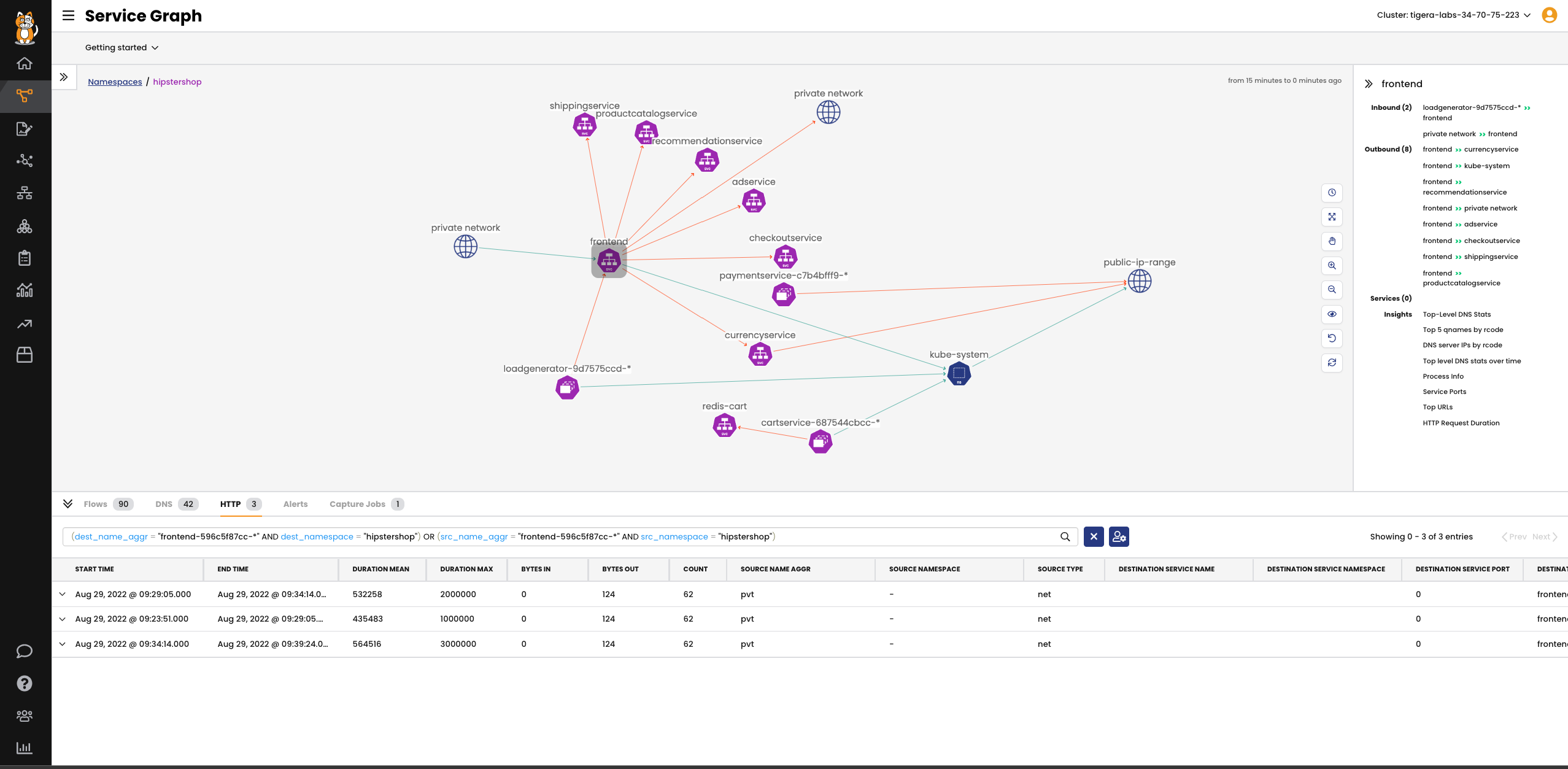
Source: Tigera
2. Consul

Consul is a service networking platform that enables secure communication between services across on-premises, hybrid, and multi-cloud environments. It provides capabilities such as service discovery, service mesh networking, and identity-based security. Consul uses a control plane to manage service connectivity and policies, while data plane components such as sidecar proxies and gateways enforce traffic rules and security policies.
License: Business Source License 1.1
Repo: https://github.com/hashicorp/consul
GitHub stars: 29K+
Contributors: 900+
Key features include:
- Service discovery: Maintains a catalog of registered services and their locations, accessible through DNS or HTTP APIs.
- Service mesh architecture: Uses sidecar proxies and gateways in the data plane to secure, observe, and manage application traffic.
- Identity-based networking: Uses service identities instead of IP addresses to define communication policies.
- Secure service communication: Supports encrypted service-to-service communication and policy enforcement across services.
- Traffic control and automation: Enables traffic management patterns such as canary deployments and traffic splitting.
- Cluster coordination: Uses protocols such as Raft for consensus and gossip-based communication for cluster membership management.
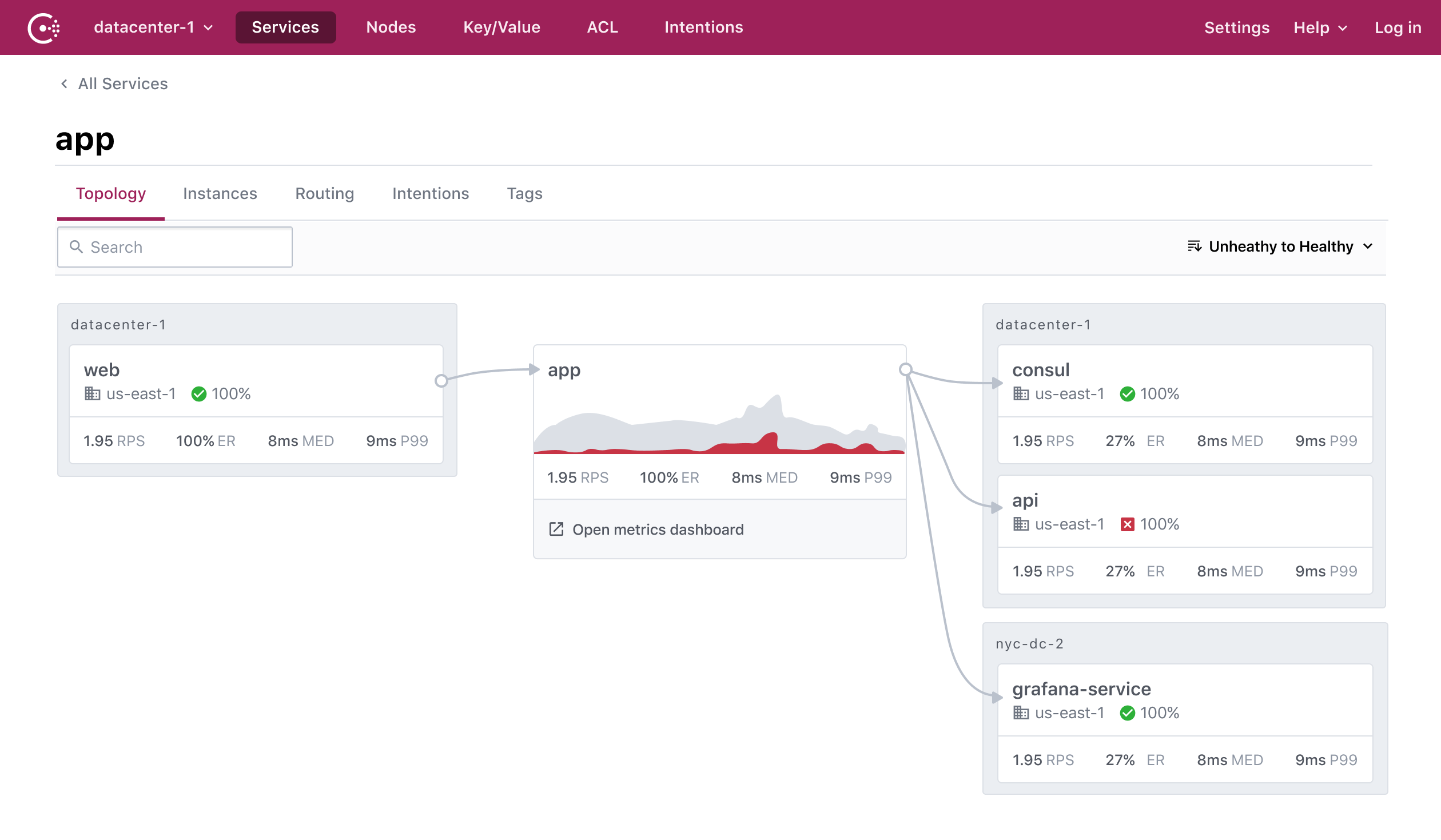
Source: HashiCorp
3. AWS App Mesh

AWS App Mesh is a managed service mesh to control and monitor communication between microservices running on AWS infrastructure. It provides application-level networking capabilities that help developers manage traffic flows and service interactions across distributed systems. By using proxy-based architecture, it enables traffic management and observability without requiring changes to application code.
License: Commercial
Key features include:
- Application-level networking: Provides a managed infrastructure layer for service-to-service communication in distributed applications.
- Proxy-based architecture: Uses proxies to manage service communication and routing across microservices.
- Traffic control: Allows management of request routing and communication between services.
- Security capabilities: Supports secure communication between services through encryption and authentication mechanisms.
- Service communication visibility: Provides insights into service interactions and application behavior.
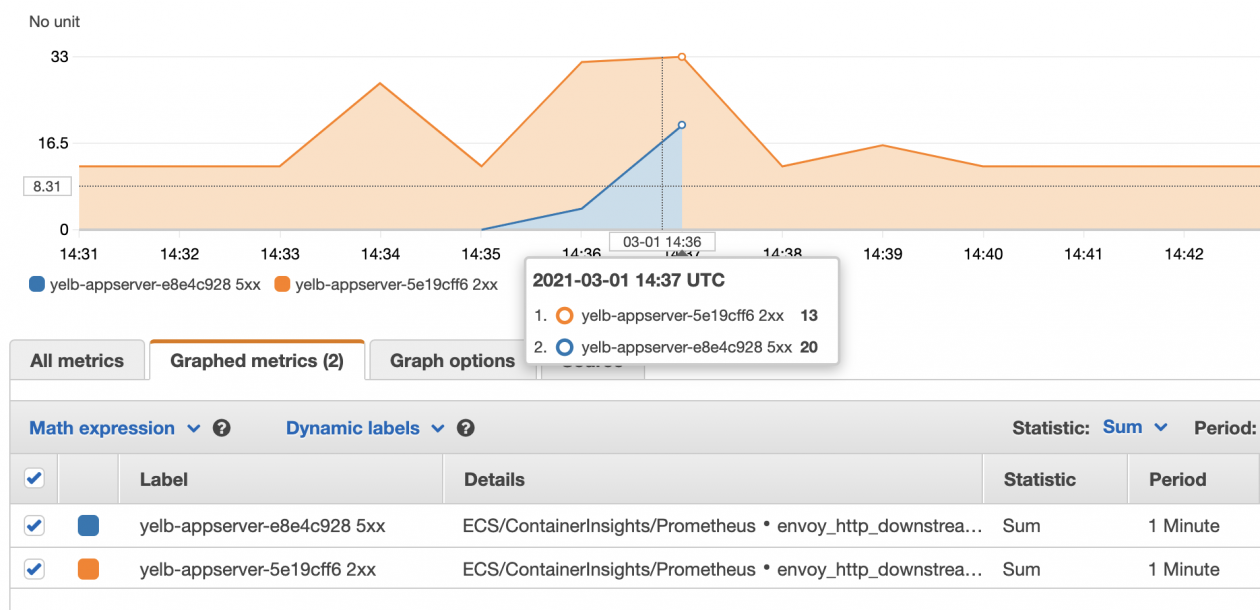
Source: Amazon
Open Source Service Mesh Solutions
4. Linkerd

Linkerd is an open source service mesh to provide security, reliability, and observability for Kubernetes-based applications. It uses lightweight proxies deployed alongside services to manage traffic and collect telemetry data. The platform focuses on simplicity and performance, enabling teams to add service mesh capabilities without introducing significant operational complexity.
License: Apache 2.0
Repo: https://github.com/linkerd/linkerd2
GitHub stars: 11.3K
Contributors: 350+
Key features include:
- Automatic mutual TLS: Enables encrypted communication and identity verification between services without requiring manual configuration.
- Real-time service metrics: Provides instant metrics on request success rates, latency, and traffic volumes across workloads.
- Latency-aware load balancing: Routes traffic based on latency measurements to improve reliability and performance.
- Minimalist Kubernetes-native design: Uses a lightweight architecture designed specifically for Kubernetes environments.
- Incremental deployment model: Allows organizations to gradually introduce service mesh functionality into existing systems.
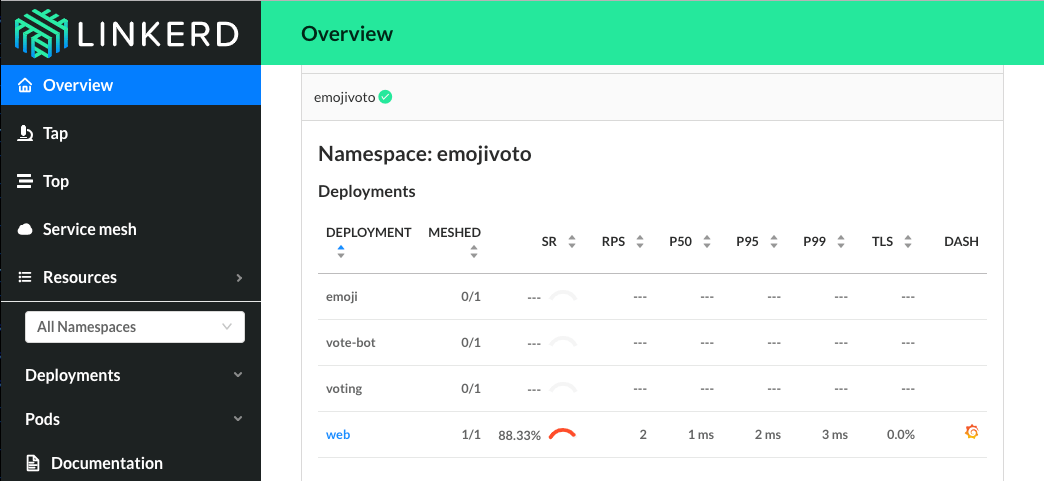
Source: Linkerd
5. Traefik Mesh

Traefik Mesh is an open source service mesh to simplify service-to-service communication management within Kubernetes clusters. Built on the Traefik Proxy, it focuses on ease of deployment and minimal operational overhead. The mesh allows administrators to monitor, secure, and control internal service communication without requiring complex configuration.
License: Apache 2.0
Repo: https://github.com/traefik/mesh
GitHub stars: 2K+
Contributors: 30+
Key features include:
- Non-invasive architecture: Operates without sidecar containers or pod injection, reducing complexity.
- Quick deployment: Can be installed and configured with minimal setup effort.
- Traffic routing and control: Supports load balancing, retries, failover handling, circuit breakers, and rate limiting.
- Observability integration: Includes support for OpenTracing and integrates with Prometheus and Grafana.
- Protocol support: Handles HTTP, HTTP/2, gRPC, WebSocket, and TCP-based traffic within Kubernetes clusters.
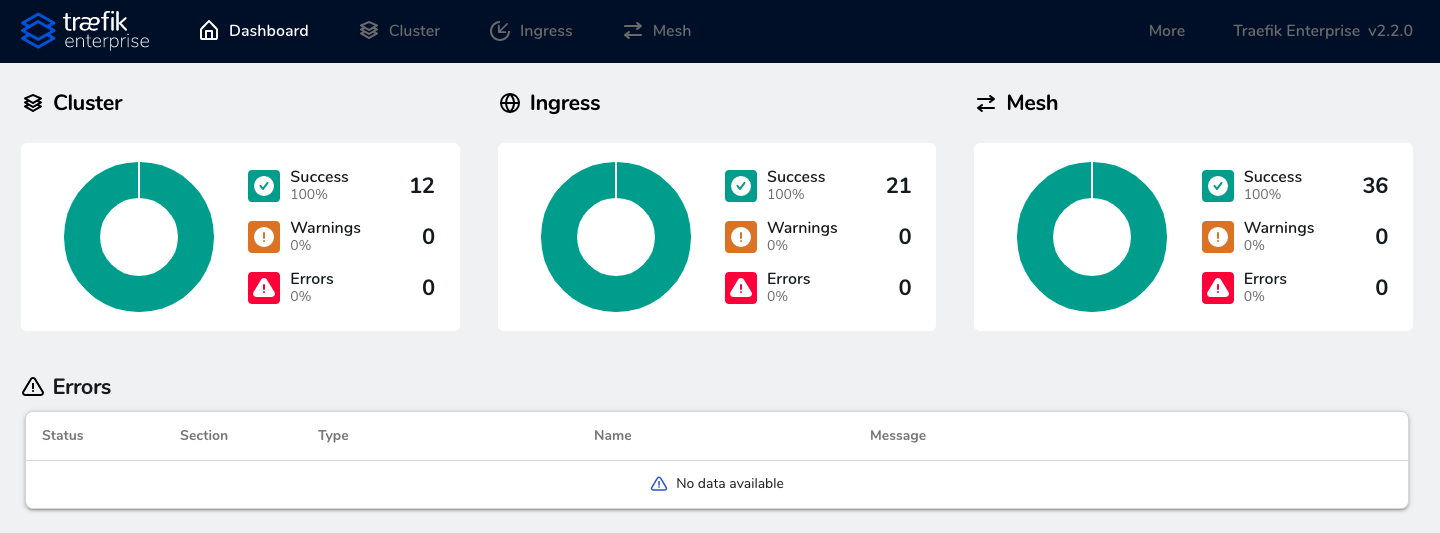
Source: Traefik Mesh
6. Istio

Istio is an open source service mesh platform that provides traffic management, security, and observability for distributed applications. It uses application proxies to intercept and manage service-to-service communication across environments such as Kubernetes clusters, virtual machines, and hybrid infrastructure. Istio allows operators to enforce policies and manage network behavior without modifying application code.
Teams comparing Istio to other options for their environment can review this guide to Istio Alternatives for a lighter-weight or platform-native approach.
License: Apache 2.0
Repo: https://github.com/istio/istio
GitHub stars: 38.1K
Contributors: 1K+
Key features include:
- Zero trust security model: Uses mutual TLS and workload identity to authenticate and encrypt service communication.
- Traffic management capabilities: Supports routing strategies such as canary deployments, A/B testing, and staged rollouts.
- Telemetry and observability: Generates metrics and tracing data that integrate with monitoring systems such as Prometheus and Grafana.
- Flexible deployment modes: Supports both traditional sidecar proxy deployments and ambient mode for simplified operations.
- Extensible architecture: Built on the Envoy proxy and supports extensions using technologies such as WebAssembly.
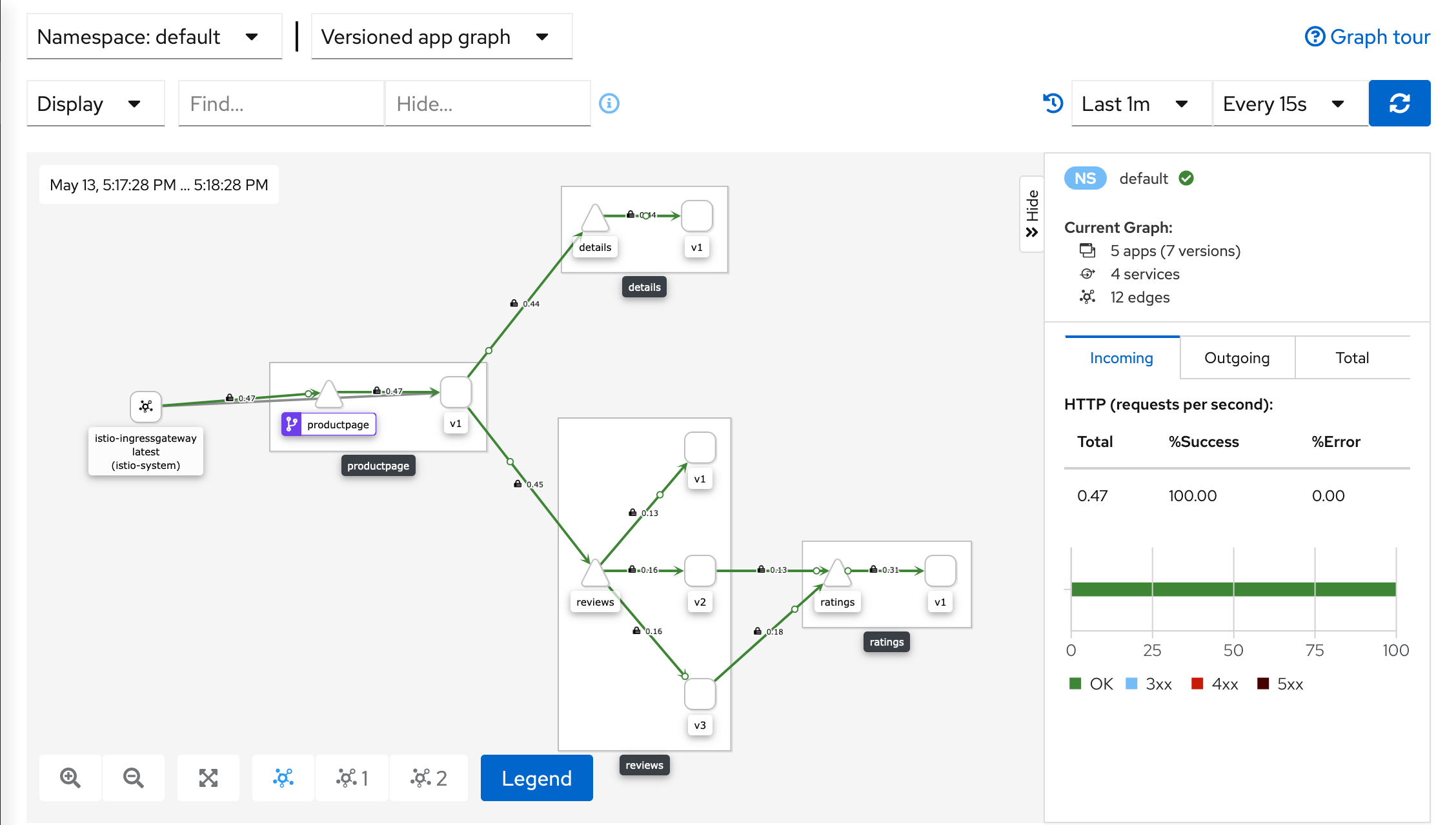
Source: Istio
7. Open Service Mesh

Open Service Mesh (OSM) is a lightweight, cloud-native service mesh to simplify the management of microservice communication in Kubernetes environments. It uses Envoy proxies deployed alongside application instances to enforce traffic policies and collect telemetry. The control plane configures the proxies using Service Mesh Interface (SMI) APIs, allowing standardized configuration of routing and access policies.
License: Apache 2.0
Repo: https://github.com/openservicemesh/osm
GitHub stars: 2.6K
Contributors: 80+
Key features include:
- SMI-based configuration: Uses the Service Mesh Interface specification to manage traffic policies and telemetry.
- Sidecar proxy architecture: Deploys Envoy proxies next to application instances to enforce networking rules.
- Secure service communication: Supports mutual TLS to encrypt service-to-service traffic.
- Traffic shifting capabilities: Allows gradual deployment strategies such as canary releases.
- Observability features: Captures metrics and telemetry data to support debugging and performance monitoring.
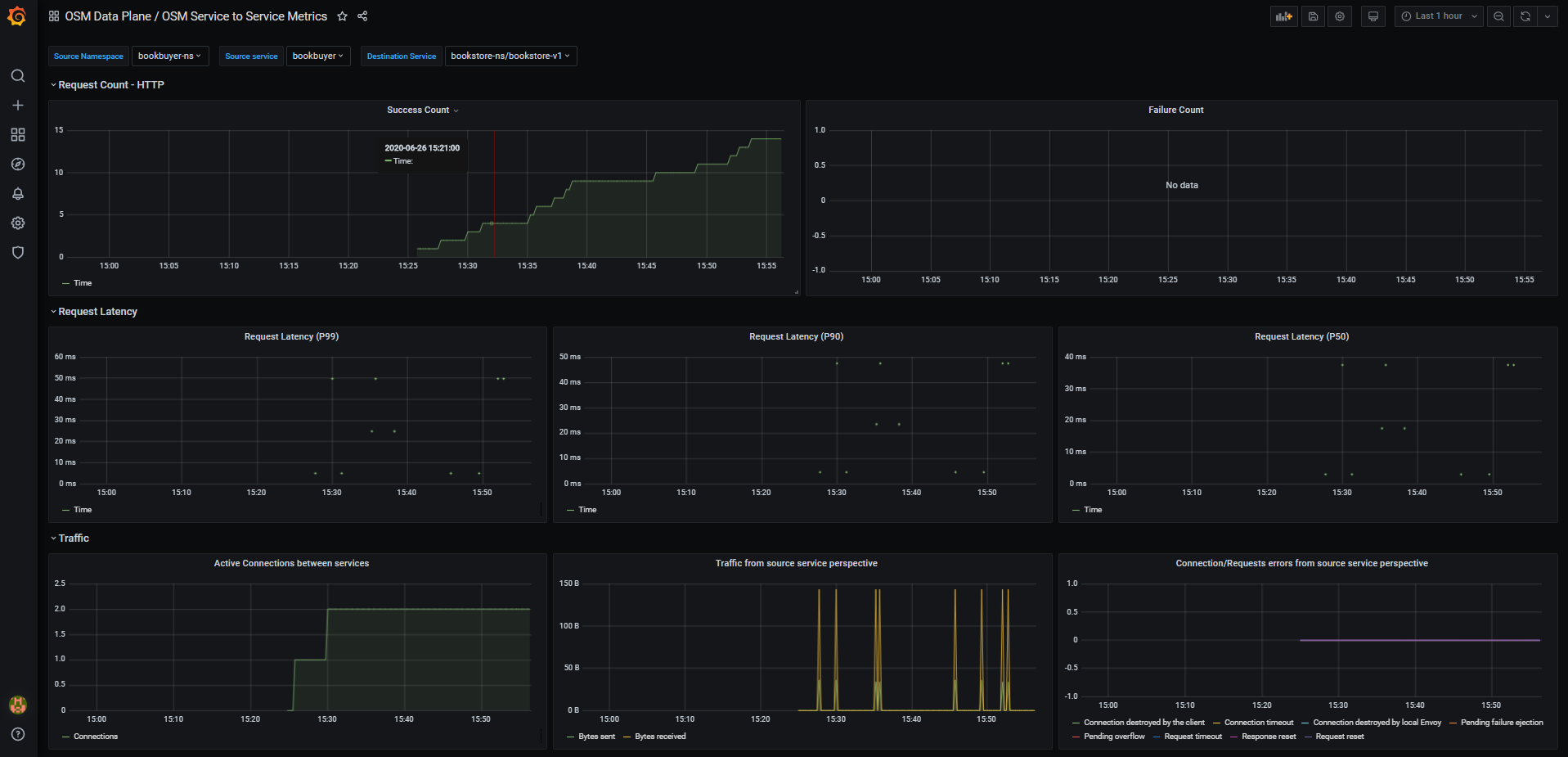
Source: Open Service Mesh
8. Kuma

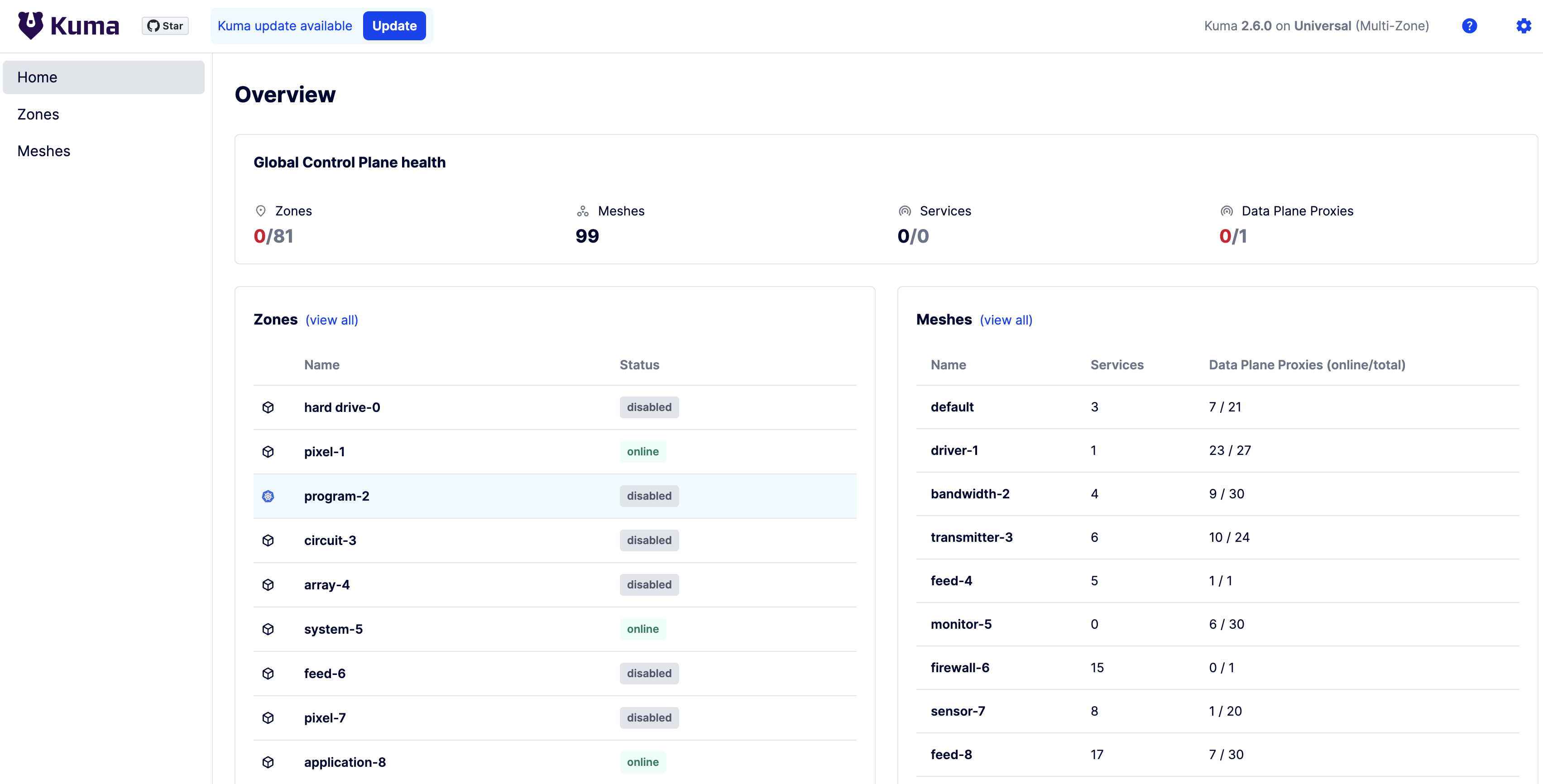
Kuma is an open source service mesh control plane built on the Envoy proxy that manages service connectivity across Kubernetes clusters, virtual machines, and hybrid environments. It provides built-in policies for routing, security, and observability while supporting multi-cluster and multi-zone deployments. Kuma allows organizations to manage multiple service meshes from a centralized control plane.
License: Apache 2.0
Repo: https://github.com/kumahq/kuma
GitHub stars: 3K+
Contributors: 100+
Key features include:
- Universal platform support: Works across Kubernetes, virtual machines, and hybrid infrastructure environments.
- Envoy-based data plane: Uses Envoy proxies to implement L4 and L7 traffic management policies.
- Multi-zone connectivity: Supports communication across clusters and cloud environments through multi-zone deployments.
- Built-in traffic policies: Includes routing, retries, timeouts, circuit breakers, and access control capabilities.
- Multi-mesh architecture: Allows a single control plane to manage multiple meshes for different teams or environments.
Source: Kuma
How to Choose Service Mesh Solutions
Selecting the right service mesh depends on infrastructure, team capabilities, and operational needs. Service meshes vary widely in complexity, features, and compatibility with existing systems. Here are key considerations to guide your evaluation:
- Platform compatibility: Ensure the service mesh supports existing infrastructure—whether Kubernetes, virtual machines, or hybrid environments. Some service meshes are Kubernetes-native, while others support broader deployment scenarios.
- Operational overhead: Assess the complexity of installation, configuration, and maintenance. Lightweight meshes are easier to adopt with fewer components, while full-featured solutions may require more resources and expertise.
- Security requirements: Consider the depth of built-in security features. Look for support for mutual TLS, fine-grained access control, and external identity integration. For zero trust environments, thorough policy enforcement is essential.
- Traffic management needs: If advanced routing, canary deployments, or blue/green releases are important, prioritize meshes with flexible traffic control.
- Observability and telemetry integration: Prefer a mesh that integrates with the monitoring stack (e.g., Prometheus, Grafana, Datadog). Native support for distributed tracing and metrics collection is key for debugging and performance tuning.
- Community and ecosystem support: Active development, strong documentation, and community engagement can significantly impact adoption and troubleshooting. Evaluate the maturity of the project and its ecosystem.
- Vendor lock-in and extensibility: Opt for open source or standards-based meshes (e.g., those using SMI) if vendor neutrality and future extensibility are priorities.
- Multi-tenancy and scalability: For large organizations or multi-team environments, look for support for multi-mesh or multi-zone deployments, policy isolation, and control plane scalability.