





TL;DR: Kubernetes security platforms combine configuration scanning, vulnerability management, RBAC analysis, policy enforcement, and runtime monitoring to cut production risk. Best for: Calico (network security and microsegmentation), Red Hat ACS (build-to-runtime guardrails), Wiz (agentless cloud context), Sysdig Secure (runtime detection).
What Is a Kubernetes Security Platform and How Does It Reduce Operational Risk?
Kubernetes security platforms reduce operational risk by automating posture management, enforcing policy-as-code, and providing real-time threat detection across the container lifecycle.
A Kubernetes security platform is a set of tools that identifies and reduces security risks across Kubernetes clusters, workloads, and deployment pipelines. It typically combines configuration scanning, vulnerability management, access control analysis, policy enforcement, and runtime monitoring in one system.
These platforms can evaluate Kubernetes manifests and container images before deployment, then monitor workloads after they enter production. They use context such as workload exposure, permissions, known vulnerabilities, and runtime behavior to prioritize risks that could affect production systems.
Key risk reduction capabilities offered by Kubernetes security platforms:
- Continuous security posture management: Detects misconfigurations, policy violations, and drift across clusters so teams can fix risks before they cause incidents.
- Risk-based vulnerability prioritization: Combines CVE severity with runtime and Kubernetes context to focus remediation on the exposures that matter most.
- Runtime detection and response: Monitors live workload behavior for suspicious activity and supports fast investigation, containment, or alerting.
- Kubernetes identity and entitlement management: Reviews RBAC, service accounts, and effective permissions to reduce excessive access and limit blast radius.
- Network visibility and microsegmentation: Maps workload communication and enforces least-privilege network access to reduce lateral movement.
- Policy enforcement throughout the deployment lifecycle: Applies consistent controls from development to admission and runtime to prevent insecure changes from reaching production.
In this article:
- Kubernetes Security Platforms at a Glance
- Why Kubernetes Security Is an Operational Risk Issue
- How Kubernetes Security Platforms Reduce Operational Risk
- Notable Kubernetes Security Platforms for Operational Risk Reduction
- Considerations for Choosing Kubernetes Security Platforms
Kubernetes Security Platforms at a Glance
The table below summarizes the key differences between the platforms covered in this guide, including what each one is built around and the trade-offs users report. We explore each platform in more detail in the sections that follow.
| Category | Solution | Best For | Key Strengths | Things to Consider |
| Kubernetes-Native Security Platforms | Calico (Tigera) | Platform teams unifying Kubernetes networking, security, observability | Staged policies, DNS policy, IDS/IPS, WAF, and flow visualization | Initial setup takes effort for teams new to Kubernetes networking |
| Kubernetes-Native Security Platforms | Red Hat Advanced Cluster Security for Kubernetes | OpenShift and Kubernetes teams needing build-to-runtime guardrails | Admission and runtime policies, compliance checks, KSPM hardening | Complex initial setup and limited public documentation |
| Kubernetes-Native Security Platforms | ARMO Platform | Kubernetes teams wanting runtime-driven posture and RBAC review | Attack paths, automated compliance checks, RBAC drift alerting | Integration gaps and configuration effort reported by users |
| CNAPPs with Kubernetes Coverage | Wiz | Security teams needing agentless cloud and Kubernetes context | Security Graph risk correlation, admission control, KSPM rules | Breadth of findings can overwhelm new users at first |
| CNAPPs with Kubernetes Coverage | Cortex Cloud (Palo Alto Networks) | Enterprises consolidating cloud, container, and SOC workflows | Attack path analysis, guided KSPM remediation, runtime agent | Configuration and permission layers can feel complex |
| CNAPPs with Kubernetes Coverage | Aqua Security | Teams needing OPA-based admission control and K8s pen testing | Rego assurance policies, CIS checks, identity-based segmentation | Reporting and dashboards have limited comparison options |
| CNAPPs with Kubernetes Coverage | Sysdig Secure | Teams prioritizing Falco-based runtime detection and response | Syscall and audit log detection, runtime risk prioritization | Some KSPM and agentless capabilities still maturing |
| CNAPPs with Kubernetes Coverage | CrowdStrike Falcon Cloud Security | Enterprises extending endpoint security into Kubernetes | Admission controller, registry scanning, SBOMs, drift detection | Pricing is steep for smaller organizations |
Why Kubernetes Security Is an Operational Risk Issue
Misconfigurations Can Lead to Service Disruption
Kubernetes configuration errors can directly affect workload availability. Incorrect resource limits, health probes, network policies, or scheduling rules can cause pods to restart, become unreachable, or fail to schedule. Misconfigured services and ingress resources can also expose applications incorrectly or prevent legitimate traffic from reaching them.
Security controls can create similar operational problems when applied without validation. For example, a restrictive network policy may block communication between dependent services. Detecting configuration issues before deployment reduces both security exposure and the risk of production outages.
Vulnerabilities Increase Production Exposure
Container images can contain vulnerable operating system packages, libraries, and application dependencies. When vulnerable images run in production, attackers may be able to exploit them to execute code, access sensitive data, or disrupt workloads.
Not every vulnerability creates the same operational risk. Teams need to consider whether the affected component is running, externally reachable, or associated with a critical workload. Combining vulnerability data with runtime and deployment context helps teams prioritize fixes that reduce actual production exposure.
Excessive Permissions Increase Blast Radius
Kubernetes uses role-based access control (RBAC) to determine what users, service accounts, and workloads can do. Overly broad roles can allow identities to read secrets, modify workloads, create privileged pods, or access resources across namespaces.
If an attacker compromises an identity with excessive permissions, those privileges can enable lateral movement and increase the scope of the incident. Reviewing effective permissions and applying least privilege limits what a compromised account or workload can affect.
Runtime Threats Can Affect Availability and Reliability
Some threats only become visible after a workload starts running. Examples include unexpected process execution, suspicious network connections, container escape attempts, cryptomining, and unauthorized changes to files or system settings.
Runtime monitoring can identify behavior that differs from expected workload activity and connect it to Kubernetes context such as pods, namespaces, and service accounts. Fast detection and containment can prevent a compromised workload from consuming resources, spreading to other systems, or disrupting application availability.
How Kubernetes Security Platforms Reduce Operational Risk
Continuous Security Posture Management
Continuous security posture management checks clusters and workloads for insecure configurations, policy violations, and deviations from security baselines. It can detect issues such as privileged containers, exposed services, missing resource controls, and unsafe pod security settings.
Continuous assessment helps teams find configuration drift after deployment instead of relying on periodic audits. It also provides a current view of cluster risk, allowing operators to address changes before they contribute to incidents or service disruption.
Risk-Based Vulnerability Prioritization
Risk-based prioritization combines vulnerability severity with Kubernetes and runtime context. Factors can include whether the vulnerable package is running, whether the workload is internet-facing, what privileges it has, and whether an exploit is available.
This approach helps teams focus remediation on vulnerabilities that create meaningful production risk. It reduces time spent patching low-impact findings while allowing critical exposures to be addressed more quickly.
Runtime Detection and Response
Runtime detection monitors containers, hosts, and Kubernetes activity for suspicious behavior. It can identify events such as unexpected process execution, privilege escalation, unusual network connections, access to sensitive files, or changes to running workloads.
Response capabilities can provide investigation context or trigger actions such as isolating a workload, terminating a container, or generating an alert. Connecting runtime events to Kubernetes metadata helps operators identify the affected application and assess operational impact quickly.
Kubernetes Identity and Entitlement Management
Identity and entitlement management analyzes RBAC roles, bindings, service accounts, and effective permissions across clusters. It can identify unused privileges, overly broad roles, risky permission combinations, and identities with access to sensitive resources.
Reducing unnecessary permissions limits what users and workloads can change if their credentials are compromised. It also lowers the chance that routine administrative mistakes affect unrelated namespaces, applications, or cluster-level resources.
Network Visibility and Microsegmentation
Network visibility maps communication between pods, services, namespaces, and external systems. This helps teams understand normal application dependencies and identify unexpected connections that may indicate misconfiguration or malicious activity.
Microsegmentation uses network policies to restrict communication to required paths. Limiting unnecessary east-west and outbound traffic reduces opportunities for lateral movement while containing compromised workloads before they affect additional services.
Policy Enforcement Throughout the Deployment Lifecycle
Policy enforcement applies security requirements during development, admission, and runtime. Policies can block container images with unacceptable vulnerabilities, prevent privileged workloads, require approved configurations, or restrict deployments that violate organizational standards.
Applying the same controls throughout the lifecycle catches problems before they reach production and detects changes that occur afterward. Automated enforcement also makes security requirements consistent across clusters while reducing dependence on manual reviews.
Notable Kubernetes Security Platforms for Operational Risk Reduction
How we selected these platforms: We shortlisted Kubernetes security platforms based on the capabilities that reduce operational risk in production clusters: configuration and posture assessment, vulnerability prioritization with workload context, RBAC and entitlement analysis, network segmentation, admission and runtime policy enforcement, and runtime threat detection and response.
Kubernetes-Native Security Platforms
1. Calico (Tigera)

Best for: Platform teams unifying Kubernetes networking, security, observability
Strengths: Staged policies, DNS policy, IDS/IPS, WAF, and flow visualization
Things to consider: Initial setup takes effort for teams new to Kubernetes networking
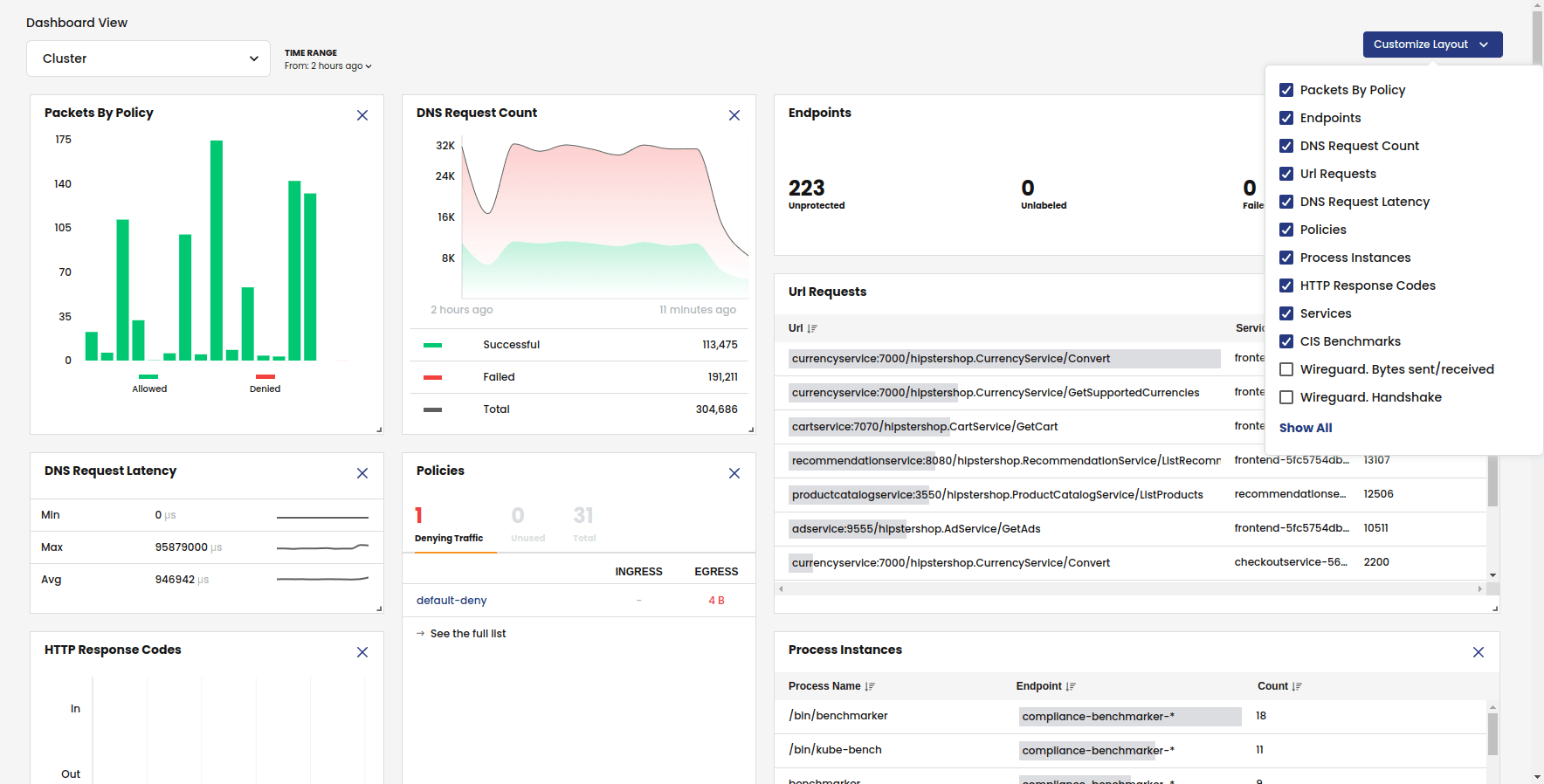
Calico is a unified platform for Kubernetes networking, network security, and observability, built on Calico Open Source, Istio, Envoy, and eBPF, with a single operator that installs, configures, and manages the stack. It runs the same way across EKS, GKE, AKS, OpenShift, Rancher, and self-managed distributions.
It covers ingress, egress, pod-to-pod, service-to-service, and multi-cluster traffic in one management plane, and extends policy enforcement to VMs and bare-metal hosts outside Kubernetes. It is available as Calico Cloud, a fully managed SaaS offering, or Calico Enterprise, deployed in on-premises, air-gapped, or private cloud environments.
Key features include:
- Network policy lifecycle management: A single console to view, recommend, stage, preview, order, and troubleshoot network security controls across multi-cluster environments. Policy tiers let platform, security, and application teams author policies independently without conflicts.
- Staged policies and policy simulation: Policies can run in observation mode so teams see exactly which traffic would be affected before a single connection is blocked, and can be validated in a simulated environment before production rollout.
- Policy recommendation engine: Evaluates observed traffic flows and generates network policy recommendations based on actual communication patterns between workloads.
- Egress controls and microsegmentation: DNS policies control access to external services by domain name rather than IP, network sets group IPs and CIDRs for reuse, and namespaces are automatically isolated to limit lateral movement. Layer 7 policies apply application-level controls.
- Network threat detection: Workload-level IDS/IPS uses pre-configured and custom threat intelligence feeds to alert on and block traffic to malicious IPs, domains, and VPNs. A workload-centric WAF protects ingress and intra-cluster HTTP traffic, and DDoS detection uses early packet processing.
- Observability and incident response: Flow logs are correlated with Kubernetes context including DNS, L7, TCP, process, socket, and audit data. A dynamic service graph maps real-time workload communication, and on-demand packet capture supports forensic analysis.
- Encryption and CI/CD integration: WireGuard-based encryption and mutual TLS protect workload-to-workload traffic without application changes, and network policies deploy as code through tools such as ArgoCD and Jenkins.
- Compliance and audit: Continuous monitoring detects compliance violations against PCI DSS, HIPAA, GDPR, SOC 2, NIST, CCPA, and custom frameworks, with automatically generated audit-ready reports and logging of all policy changes.
Limitations (as reported by users on G2):
- Onboarding effort: Teams new to Kubernetes networking report needing time to become comfortable with concepts such as policy tiers and workload identities before the platform is fully productive.
- Documentation depth: Several reviewers noted that the documentation is comprehensive but would benefit from more real-world examples and troubleshooting scenarios.
- Edition differences: Some capabilities are tied to the commercial editions, and the managed SaaS edition exposes fewer configuration options than the self-managed one.
Source: Tigera
2. Red Hat Advanced Cluster Security for Kubernetes

Best for: OpenShift and Kubernetes teams needing build-to-runtime guardrails
Strengths: Admission and runtime policies, compliance checks, KSPM hardening
Things to consider: Complex initial setup and limited public documentation
Red Hat Advanced Cluster Security for Kubernetes (RHACS) applies security controls across build, deploy, and runtime workflows in a Kubernetes-native platform. It combines vulnerability management with policy guardrails so that findings from images and manifests connect to what is actually running in the cluster.
The platform delivers Kubernetes security posture management to harden cluster infrastructure, and applies deploy-time and runtime policies that prevent risky workloads from being deployed or from running. It is included with Red Hat OpenShift Platform Plus and is also offered as a managed cloud service for Kubernetes-based workloads and containers.
Key features include:
- Deploy-time and runtime policy enforcement: Standard policies block risky workloads before deployment and flag them at runtime. Teams can view policy violations along with their causes and take corrective action directly.
- Kubernetes security posture management: Assesses and hardens Kubernetes infrastructure against targeted exploits, giving operators a current view of cluster configuration risk rather than a periodic audit.
- Vulnerability management: Identifies and prioritizes vulnerabilities for remediation across container images and Kubernetes infrastructure, with analysis, investigation, and remediation handled in one place.
- Automated compliance checks: Validates configurations against CIS, NIST, PCI, and HIPAA, with interactive dashboards and one-click reports for audits.
- Software supply chain scanning: Integrates with CI/CD pipelines and image registries for continuous scanning and assurance of containers before they reach a cluster.
- Cross-cluster visibility dashboard: A real-time interactive dashboard shows key metrics from hosts, containers, and services, giving teams visibility into deployments across Kubernetes namespaces and clusters.
- Virtual machine coverage: Red Hat Advanced Cluster Security for Virtualization extends the same console and policy standards to VMs running on OpenShift Virtualization Engine.
Limitations (as reported by users on PeerSpot):
- Initial setup complexity: Reviewers describe the initial setup as complex, with a learning curve and costs that vary across environments.
- Command line and configuration: Some users found the command line and configuration difficult to understand, which made deployment more involved than expected.
- Documentation availability: Publicly available documentation was described as limited, leaving teams reliant on support for some questions.
- API deprecations: One reviewer noted that deprecated APIs create work at each upgrade cycle.
- Feature breadth: Reviewers comparing the platform to broader CNAPP suites noted gaps in areas such as IAST coverage and access control features.
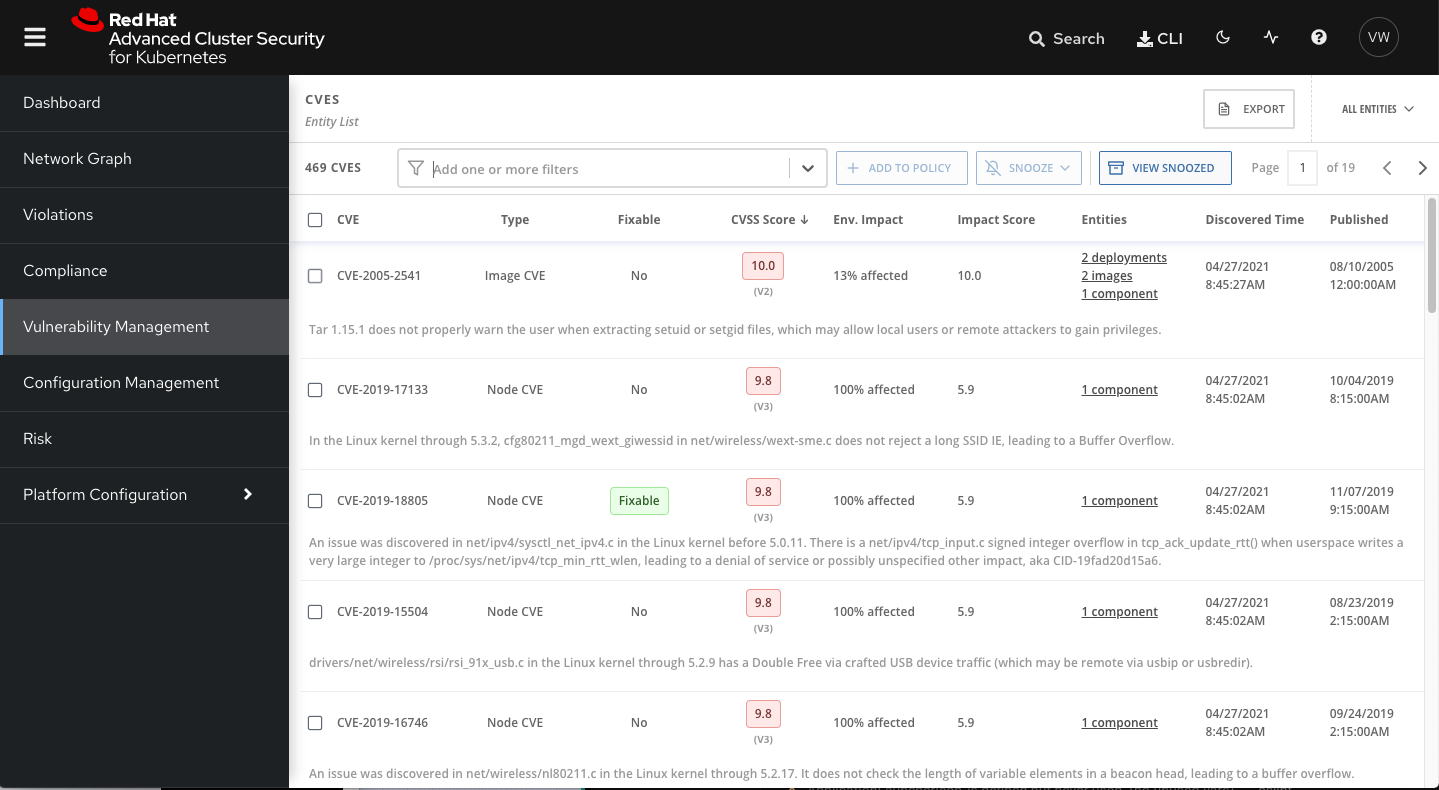
Source: Red Hat
3. ARMO Platform

Best for: Kubernetes teams wanting runtime-driven posture and RBAC review
Strengths: Attack paths, automated compliance checks, RBAC drift alerting
Things to consider: Integration gaps and configuration effort reported by users
ARMO Platform provides runtime-driven Kubernetes security posture management, working to reduce the cluster attack surface and continuously harden clusters, containers, hosts, and workloads. It surfaces, prioritizes, and remediates issues with the stated aim of not breaking running applications.
The platform targets misconfigurations, sensitive data access, and RBAC risks, and uses relevancy and prioritization engines to cut down the volume of findings teams have to review. It is built on the open source Kubescape project and can be hosted by ARMO, installed as a private tenant in a customer cloud account, or deployed on-premises.
Key features include:
- Kubernetes attack path analysis: Maps the paths into a cluster and identifies the critical security issues that need to be remediated to block them.
- RBAC insights: A visualizer with built-in queries lets teams inspect role-based access control, identify over-privileged roles, and receive alerts when cluster role privileges drift from their expected state.
- Automated compliance coverage: Over 90% of the required compliance checks are automated across CIS, NSA, MITRE, SOC 2, PCI, and other frameworks.
- Hardening remediation guidance: A hardening co-pilot and smart remediation guidance are built into the workflow so findings come with corrective steps rather than raw alerts.
- CI/CD gate integration: The platform embeds into existing DevOps tools and CI/CD gates so issues surface before workloads reach production.
- Flexible hosting and enterprise controls: Deployment options include ARMO-hosted, in-cloud private tenant, and on-premises, with single sign-on, multi-user and multi-tenancy support, third-party integrations, and configurable data retention.
Limitations (as reported by users on G2):
- Integration issues: Several reviewers reported friction connecting the platform to existing tooling, including ticketing and SIEM systems, which interrupted workflows.
- Missing features: Users noted gaps in areas such as export formats, alert customization, and applying configuration fixes directly from the platform.
- Configuration effort: Reviewers described the configuration process as time-consuming to master, and troubleshooting setup problems as difficult.
- Learning curve: Users less experienced with Kubernetes reported needing time to navigate the interface and locate specific settings.
- Pricing structure: Some reviewers found the pricing model, which is tied to node count, expensive for environments running many small nodes.
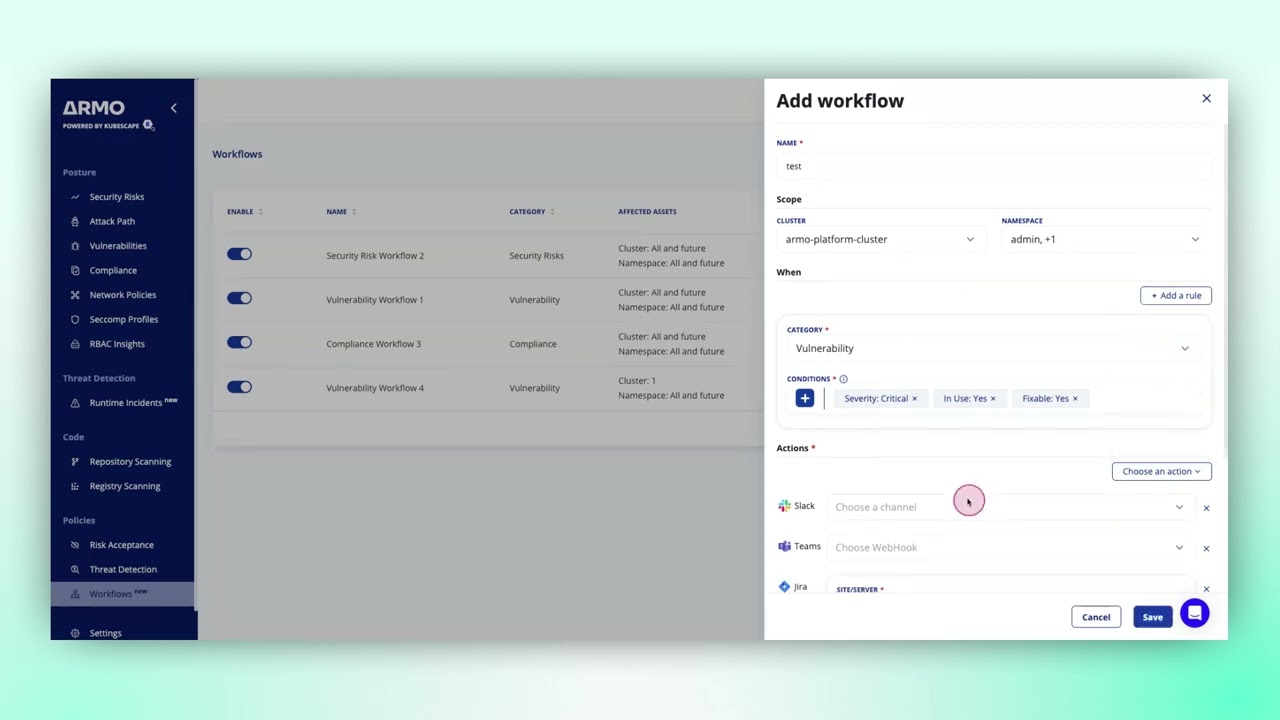
Source: ARMO
Cloud-Native Application Protection Platforms with Kubernetes Coverage
4. Wiz

Best for: Security teams needing agentless cloud and Kubernetes context
Strengths: Security Graph risk correlation, admission control, KSPM rules
Things to consider: Breadth of findings can overwhelm new users at first
Wiz secures containers, Kubernetes, and cloud environments from build time to runtime, with agentless scanning that covers containers, hosts, and clusters across various Kubernetes setups, serverless containers, and standalone containers on virtual machines.
Its Security Graph combines data from containers, hosts, cloud providers, and Kubernetes APIs to correlate risk, and the same policy framework extends from production back to code. The platform also detects malicious behavior in Kubernetes clusters in real time and supports investigation and response workflows.
Key features include:
- Graph-based risk correlation: Combines container, host, cloud provider, and Kubernetes API data to identify vulnerabilities, misconfigurations, internet-facing containers, excessive permissions, and leaked secrets, and to block attack paths into the environment.
- Automatic Kubernetes security posture management: Continuously monitors cluster configuration, runs compliance assessments, and applies both built-in and custom rules.
- Admission control: The Wiz Admission Controller blocks resources and container images that carry security risks before they are admitted to the cluster.
- Infrastructure-as-code scanning: Scans Dockerfiles, Kubernetes YAML manifests, Helm charts, and Terraform for misconfigurations, and can block builds that violate a policy.
- Registry and pipeline scanning: Container images are scanned in registries and within CI/CD workflows, with compliance validated before images are deployed to a cluster.
- Real-time threat detection and response: Sensor-based detections identify malicious behavior in Kubernetes clusters, with end-to-end attack visibility and cloud-native investigation and response workflows.
Limitations (as reported by users on G2):
- Learning curve: A common theme is that the volume of information and the number of features take time to navigate, particularly for teams new to cloud security.
- Reporting flexibility: Reviewers asked for more customizable dashboards and reporting, and some noted the inability to assign owners for vulnerability remediation.
- Agentless scan timing: Because scanning runs on a cycle rather than continuously, some users reported waiting until the next scan to confirm a remediation was successful.
- Container vulnerability precision: One reviewer described packages being flagged inside container images even when they are not loaded or executed by the running application.
- Pricing model: Several reviewers described the cost as high at scale and the licensing structure as difficult to understand.
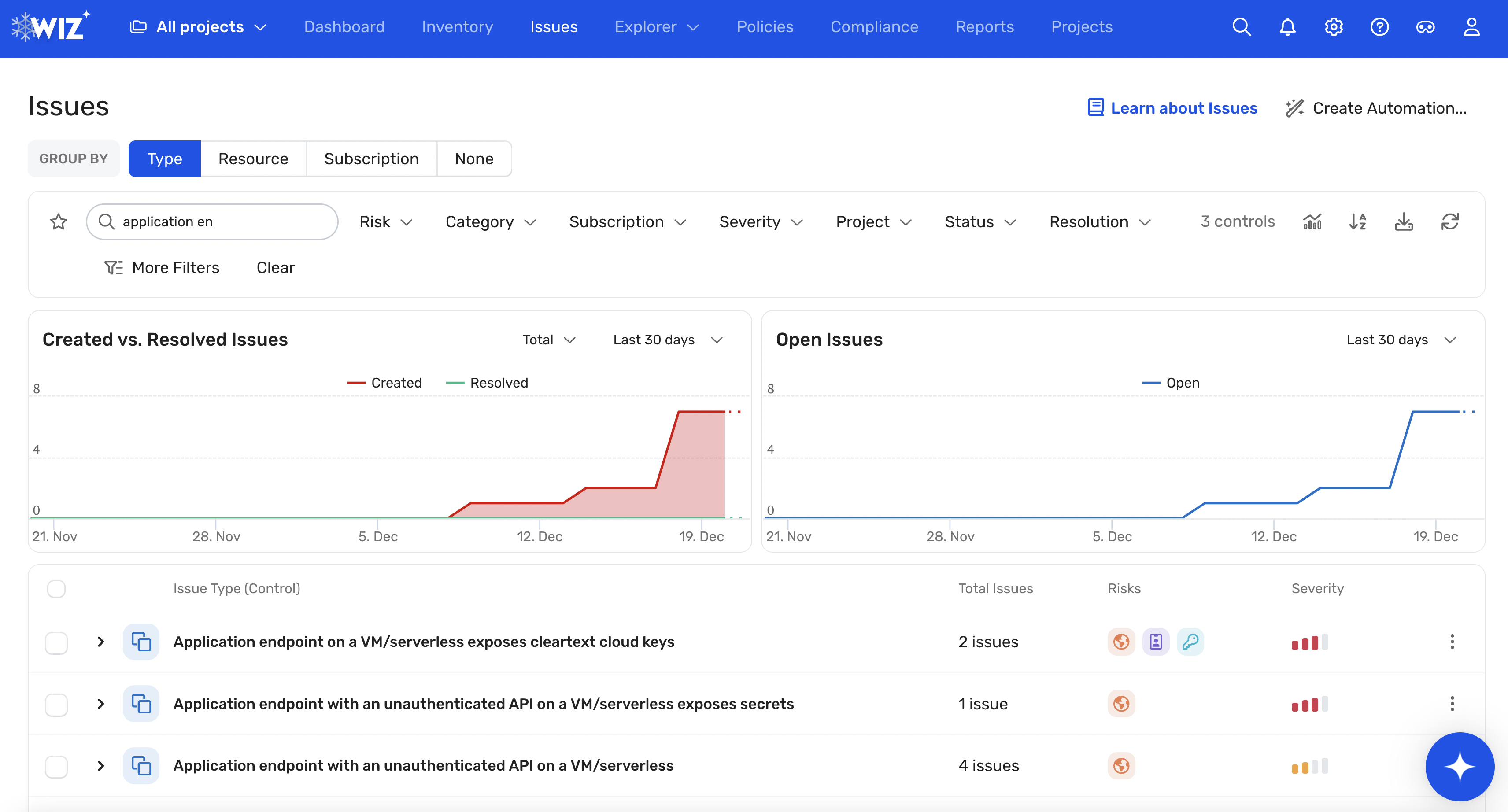
Source: Wiz
5. Cortex Cloud (Palo Alto Networks)

Best for: Enterprises consolidating cloud, container, and SOC workflows
Strengths: Attack path analysis, guided KSPM remediation, runtime agent
Things to consider: Configuration and permission layers can feel complex
Cortex Cloud, the current version of Palo Alto Networks’ cloud security platform, covers containerized applications from code through to runtime. It provides end-to-end visibility into container risks at every stage of the application lifecycle, from code and build through deployment and runtime.
The platform connects risks across containers, clusters, and cloud environments to identify critical attack paths, and embeds security guardrails into CI/CD pipelines. Kubernetes and container security sits within the wider Cortex Cloud runtime security and cloud posture offering rather than as a standalone product.
Key features include:
- Kubernetes security posture management: Finds and fixes Kubernetes misconfigurations and security risks with guided remediation, and measures cluster posture against CIS benchmarks for EKS, AKS, and GKE.
- Correlated vulnerability prioritization: Surfaces critical vulnerabilities using correlated risk factors including external exposure, excessive permissions, misconfigurations, sensitive data, secrets, and malware, to reduce alert volume.
- Attack path identification: Connects risks across containers, clusters, and cloud environments so teams can see which combinations form an exploitable path.
- Runtime protection: A lightweight agent detects and stops known and unknown threats across multicloud environments, including malware, cryptomining, privilege escalation, and container escapes.
- CI/CD guardrails: Adds security checks to image builds and their deployments, and automatically scans repositories and registries for vulnerabilities and misconfigurations.
- Compliance management: Maintains a complete audit history of compliance from build to run, runs compliance and reporting checks against leading frameworks, and supports policies for custom checks.
Limitations (as reported by users on G2):
- Configuration complexity: Reviewers described the layers of configuration and permissions as not always intuitive, which slowed down troubleshooting.
- Learning curve: Users reported a steep learning curve at the start, particularly when setting up more advanced deployments.
- User interface: Some reviewers noted that the interface would benefit from refinement despite strong underlying performance.
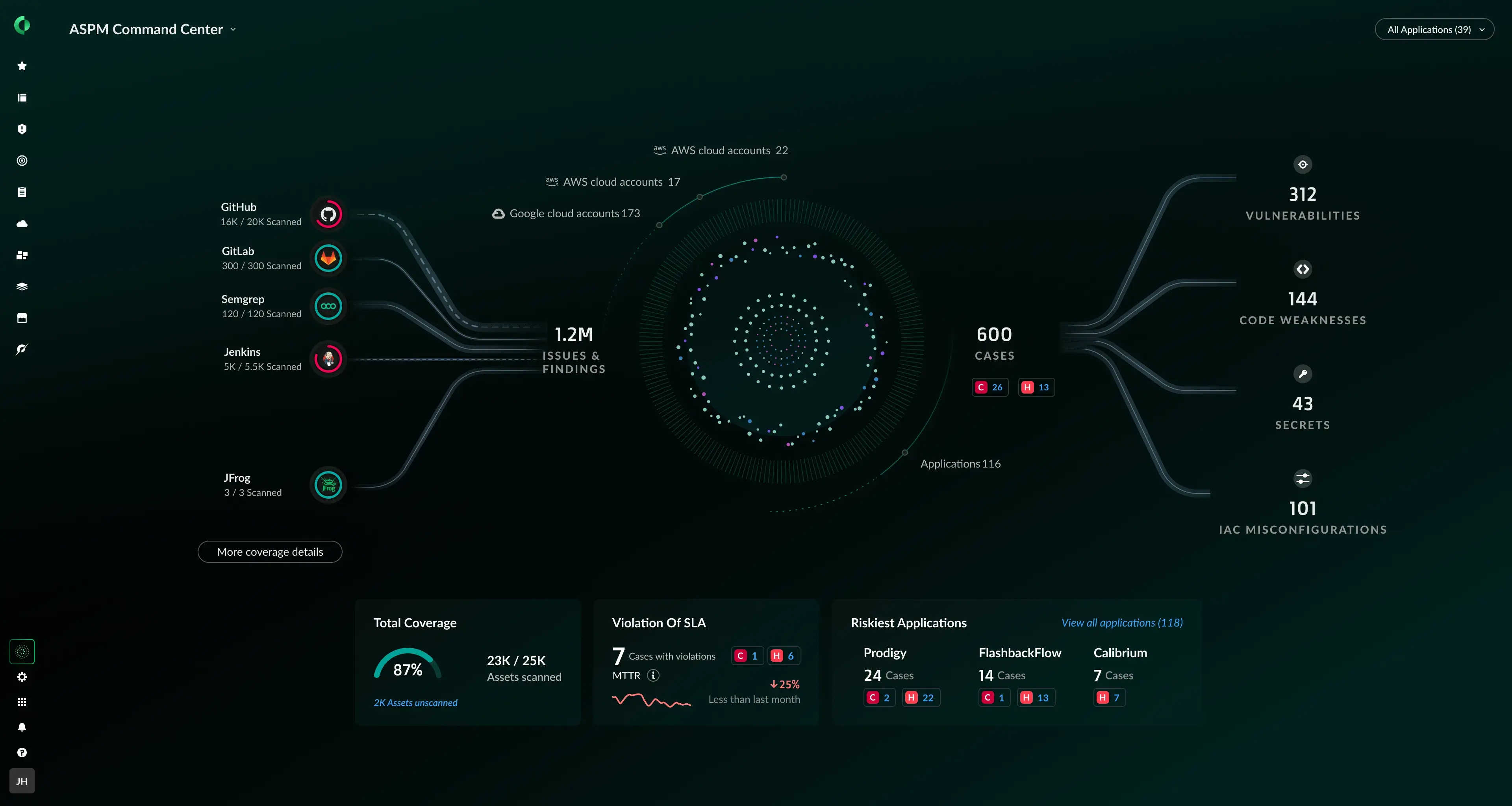
Source: Palo Alto Networks
6. Aqua Security

Best for: Teams needing OPA-based admission control and K8s pen testing
Strengths: Rego assurance policies, CIS checks, identity-based segmentation
Things to consider: Reporting and dashboards have limited comparison options
Aqua Security provides Kubernetes security posture management alongside Kubernetes runtime protection, using Kubernetes-native mechanisms to deliver policy-driven, full lifecycle protection and compliance for cluster workloads.
The platform handles security configuration and compliance assessment, controls which workloads are admitted to a cluster based on pod, node, and cluster attributes, and protects entire clusters through granular policies applied via Kubernetes admission controllers. Runtime protection deploys using native Kubernetes mechanisms across managed and unmanaged environments.
Key features include:
- Kubernetes Assurance Policies: Powered by Open Policy Agent, these apply dozens of out-of-the-box rules or custom rules written in Rego to determine which workloads are admitted across the cluster.
- Workload compliance controls: Determines the compliance of Kubernetes workloads based on image contents, configuration, and pod attributes, working alongside Image Assurance Policies to prevent unsafe and non-compliant workloads from deploying.
- Least privilege assessment: Evaluates the permissions and privileges of users and subjects in Kubernetes against research-based best practices and provides remediation advice to reduce over-provisioned roles and service account privileges.
- CIS Kubernetes Benchmark checks: Automates compliance checks with more than 100 individual controls, daily scans, and a detailed findings report, using the open source kube-bench project.
- Cluster penetration testing: Runs automated penetration testing of Kubernetes clusters against real-world attack vectors, using the open source kube-hunter project, to complement configuration checks.
- Risk Explorer visualization: An interactive map of running clusters rates Kubernetes risks and provides real-time visibility into namespaces, deployments, nodes, containers, the images they came from, and network connections between and within namespaces.
- Identity-based segmentation: Enforces container-level network rules within and across clusters using an identity-based firewall, works alongside Kubernetes network plugins including Calico, Weave, Flannel, and Contiv, and creates rules based on namespaces, clusters, and deployments.
- Kubernetes context for audit events: Event logging includes Kubernetes-specific information such as pod name, type, deployment, namespace, user access, and container start and stop events, for compliance, forensics, and incident response.
Limitations (as reported by users on G2):
- Dashboards and reporting: Reviewers reported that dashboards cover only basic metrics and that comparing past and current results is difficult.
- Navigation and module structure: Users described the interface as difficult to navigate without prior experience, and noted that understanding how the different modules relate takes time.
- Deployment effort: Reviewers running large environments reported that deployment and policy configuration require skilled resources and extended onboarding.
- Alert tuning: Some users noted a high volume of initial alerts that require tuning before the signal becomes manageable.
- Support response times: A few reviewers reported waiting a couple of days for explanations or fixes on some issues.
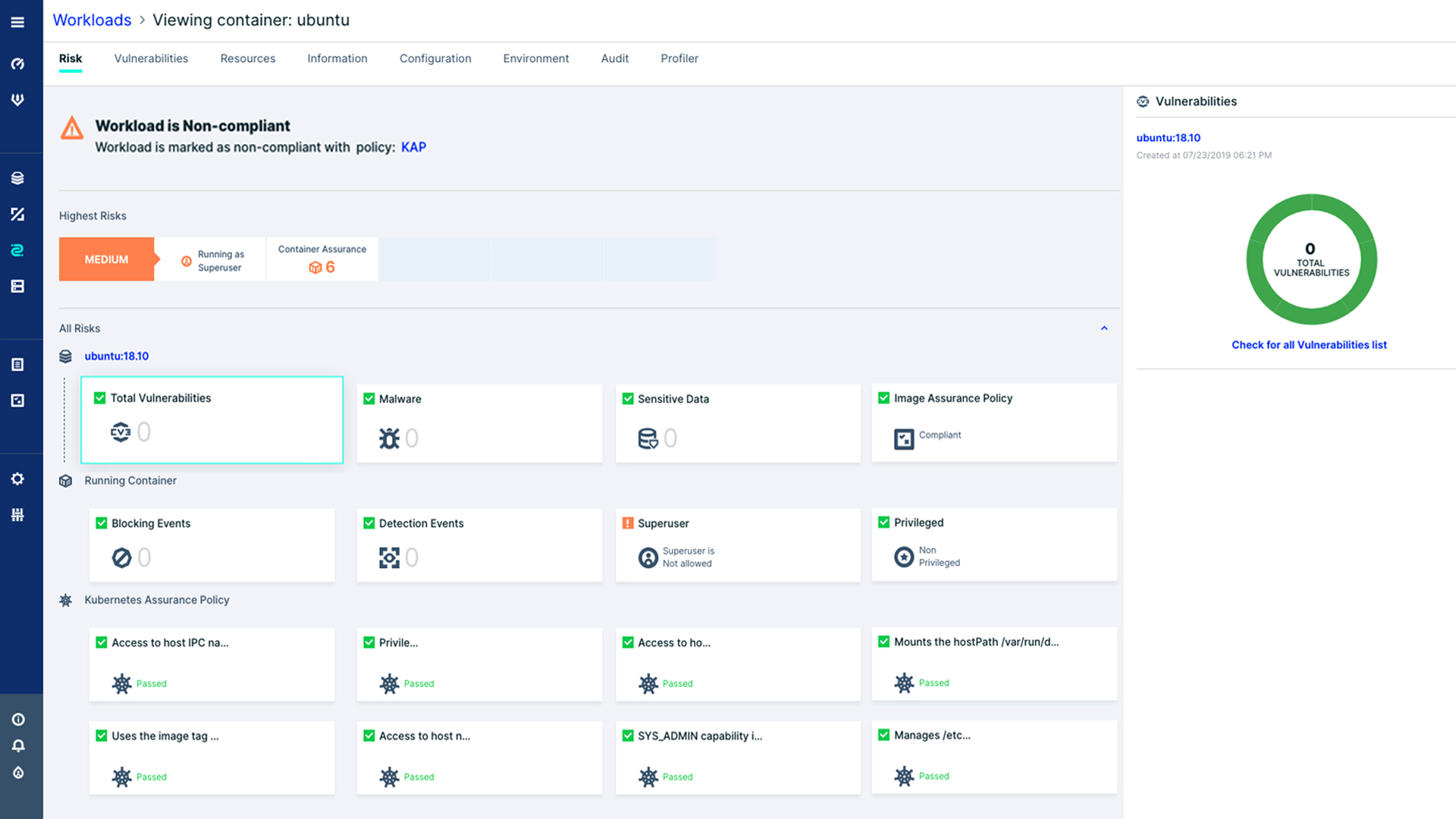
Source: Aqua
7. Sysdig Secure

Best for: Teams prioritizing Falco-based runtime detection and response
Strengths: Syscall and audit log detection, runtime risk prioritization
Things to consider: Some KSPM and agentless capabilities still maturing
Sysdig Secure secures containers and Kubernetes across the full application lifecycle, with real-time visibility into containerized workloads at runtime. It is aimed at teams that need to detect threats, remediate vulnerabilities, investigate incidents, and act on risk in environments that change constantly.
The platform is powered by Falco, the open source runtime detection engine, and continuously analyzes system calls and Kubernetes audit logs to identify suspicious activity as it occurs. It provides consistent coverage across hybrid environments, protecting containerized workloads in the cloud and on-premises.
Key features include:
- Falco-powered runtime detection: Continuously analyzes system calls and Kubernetes audit logs to identify suspicious activity as it happens, across containers, servers, Kubernetes, and serverless workloads.
- Runtime risk prioritization: Correlates context across container risk factors including in-use packages, real-time exploitability, and exposure, so the most critical vulnerabilities and risks surface first.
- Incident investigation workflows: Captures metadata and context from the platform, including interactive commands and system calls, supporting granular incident response workflows.
- Kubernetes security posture management: Ties Kubernetes security violations back to the infrastructure-as-code manifest that defines the resource, and can auto-generate pull requests so remediation happens at the source.
- Vulnerability grouping for remediation: Groups findings by container image and resource so teams can target the fixes with the broadest impact, with AI-powered guidance for triage.
- Hybrid and on-premises coverage: Provides consistent visibility, threat detection, and vulnerability management for containerized workloads running in the cloud or on-premises.
Limitations (as reported by users on G2):
- Feature maturity: Reviewers cited gaps including agentless scanning not being generally available and issues with KSPM features, particularly in the on-premises deployment.
- Initial setup complexity: Users described the initial setup and configuration as challenging for teams without container or Kubernetes expertise.
- Missing observability capabilities: Some reviewers noted the absence of tracing and logging features they expected for observability use cases.
- Learning curve: The breadth of features was reported as taking time to learn, which affects the ease of threat analysis early on.
- Dashboards and reporting: Reviewers on other platforms noted that summarizing findings quickly for senior stakeholders is harder than accessing the underlying data.
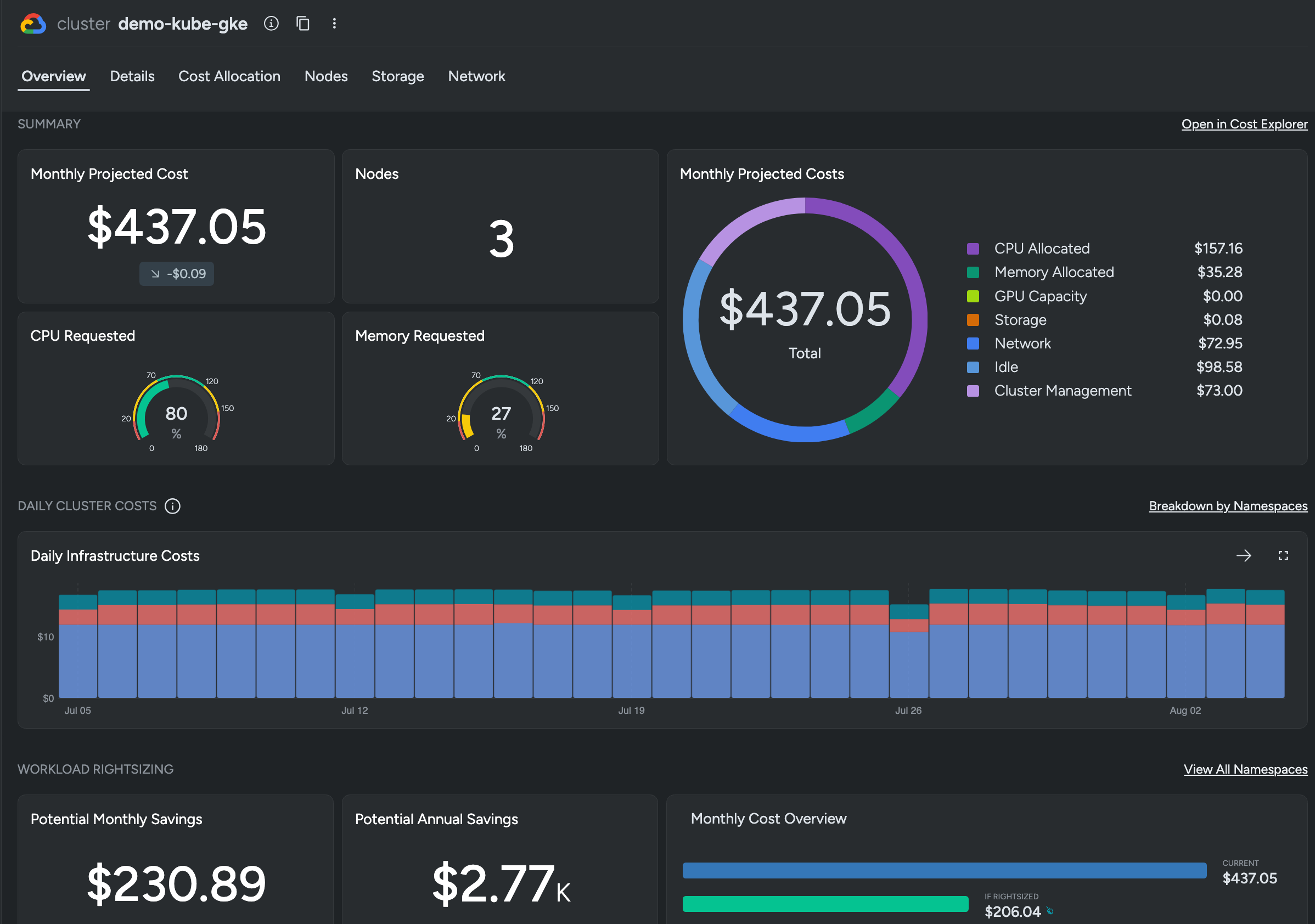
Source: Sysdig
8. CrowdStrike Falcon Cloud Security
Best for: Enterprises extending endpoint security into Kubernetes
Strengths: Admission controller, registry scanning, SBOMs, drift detection
Things to consider: Pricing is steep for smaller organizations
CrowdStrike Falcon Cloud Security secures Kubernetes and containers from build to runtime, combining agentless image assessment with runtime defense and adversary-informed risk prioritization. It covers containers, Kubernetes, and serverless environments in a single console.
The platform applies consistent policies from build through runtime, blocking vulnerable and non-compliant images from advancing through development pipelines and detecting active threats in running clusters. It also extends coverage to cloud-hosted AI workloads and the container images used in AI pipelines.
Key features include:
- Pre-deployment image assessment: Detects vulnerabilities and dependencies across registries, generates SBOMs for supply chain transparency, prioritizes exploitable risks using adversary intelligence, and blocks high-risk builds before production.
- Kubernetes admission control: The Kubernetes Admission Controller blocks risky deployments, and policies are enforced across containers, nodes, and functions, with custom security requirements codified as programmable policies.
- Container discovery and visibility: Discovers containers across managed and self-managed clusters, identifies rogue or attacker-spawned containers, surfaces unprotected assets that require coverage, and presents clusters and workloads in one console.
- Runtime threat detection: Combines a sensor optimized for containers with agentless detections across the Kubernetes API Server to detect and prioritize active threats, and identifies workload drift and unauthorized containers.
- Continuous compliance assessment: Workloads are continuously assessed against compliance benchmarks as part of the same policy framework used at build time.
- AI workload coverage: Detects prompt injections, data leaks, and access control and content policy violations for cloud-hosted AI workloads, and assesses images used in NVIDIA NIM and AI pipelines with trusted image policies enforced before deployment.
Limitations (as reported by users on G2):
- Pricing: Reviewers frequently described the cost as high, which makes it difficult for smaller organizations to justify.
- Uptime and user experience: Users identified uptime and the overall user experience, including during enrollment, as areas that need improvement.
- Feature complexity: Some reviewers found the breadth of features overwhelming and reported a significant learning curve before becoming productive.
- Configuration granularity: Reviewers on other platforms asked for more granular control in configurations and improvements to data visualization.
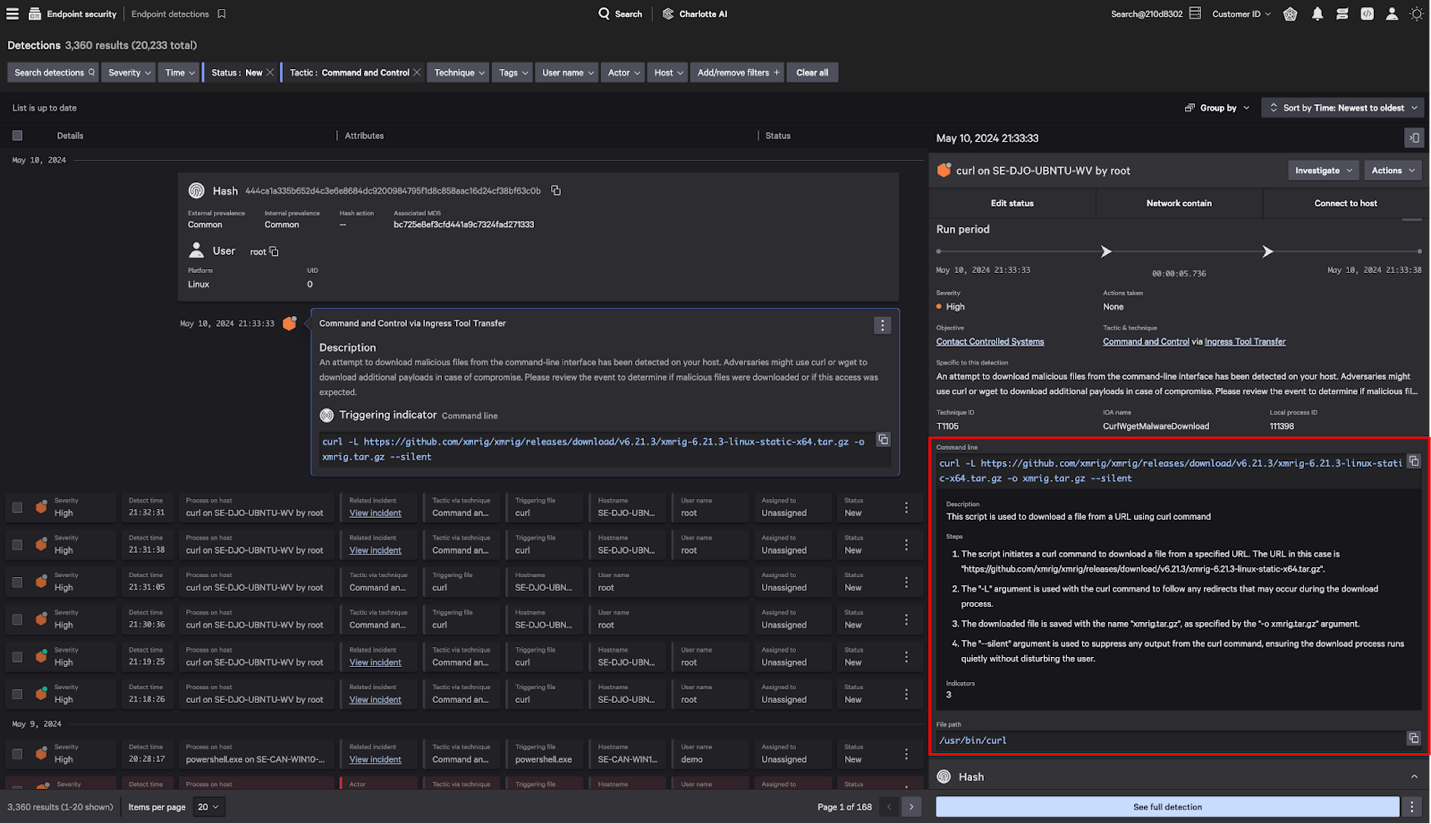
Source: CrowdStrike
Considerations for Choosing Kubernetes Security Platforms
Here are some of the main aspects that organizations should consider when evaluating Kubernetes security software products.
1. Security Coverage
Security coverage is the breadth of protection that a tool offers across the Kubernetes stack, including the cluster, nodes, pods, containers, and network layers. Security requires addressing vulnerabilities not just in containers themselves, but also in cluster configurations, network policies, and access controls.
Organizations should examine whether a tool defends against major attack vectors such as man-in-the-middle attacks, privilege escalation, and data exfiltration, as well as whether it provides controls like runtime detection, vulnerability scanning, and policy enforcement.
When assessing security software, it is also vital to determine how well it complements existing security measures. Some tools specialize in runtime monitoring, while others focus on compliance checks, configuration validation, or vulnerability assessment. Choosing a solution with multi-layered capabilities, or combining multiple tools that cover distinct risks, can improve overall cluster security.
2. CI/CD Pipeline Integration
Security software should integrate into CI/CD pipelines to automatically scan container images, manifests, and third-party dependencies for vulnerabilities and misconfigurations before they reach production. Early detection allows teams to remediate issues without slowing down deployment cycles or disrupting DevOps workflows.
Integration should be straightforward, offering plugins or APIs that work with popular CI/CD platforms like Jenkins, GitLab CI, or GitHub Actions. Real-time feedback within the pipeline, such as blocking builds that fail security checks, is crucial for enforcing best practices. Consider whether the tool supports policy as code, automated compliance scans, and centralized reporting.
3. Scalability and Performance
As Kubernetes environments grow to handle more clusters, nodes, and workloads, security tools must scale accordingly without introducing performance bottlenecks. The optimal software supports distributed architectures, leverages cloud-native design principles, and applies controls with minimal resource overhead. This ensures the cluster’s security posture remains strong even as workloads and traffic increase.
Performance impact is a key evaluation metric. Tools should operate efficiently—not slowing down deployment pipelines, cluster initialization, or runtime processes. Benchmarking resource usage and latency, as well as reviewing deployment best practices for scaling, is vital to ensure the solution aligns with operational requirements. Consider whether the architecture allows for horizontal scaling and stateless operation if needed for large-scale deployments.
4. Alerting and Reporting
Timely alerts and actionable reporting are critical for any Kubernetes security tool. The software must provide real-time notifications for detected threats or policy violations, with enough context to enable rapid remediation. Effective alerting includes integration with communication channels like email, Slack, PagerDuty, or SIEM platforms, so that teams are informed without delay.
Beyond alerts, detailed reporting capabilities help security teams analyze trends, investigate incidents, and demonstrate compliance. Tools should allow for customizable dashboards, exportable audit logs, and scheduled reports tailored to technical and management stakeholders.
5. Community and Documentation
A strong open-source or vendor community ensures that Kubernetes security software stays updated with the latest threat intelligence and functionality improvements. Community-driven tools benefit from frequent releases, code reviews, and user-contributed improvements. Engaged communities also promote best-practice sharing, peer support, and prompt vulnerability disclosures, which help organizations respond swiftly to new security risks.
Comprehensive documentation is equally important for successful deployment and ongoing maintenance. Clear guides, user manuals, FAQs, and configuration examples minimize the learning curve and reduce errors during installation and integration. Evaluate whether the project or vendor offers tutorials, troubleshooting resources, and active support forums.
Related content: Read our guide to Kubernetes compliance
Conclusion
Kubernetes security software plays a critical role in protecting containerized environments from evolving threats while maintaining agility and scalability. By integrating security controls across the development and deployment pipeline, organizations can reduce vulnerabilities, enforce compliance, and ensure consistent security practices across distributed workloads.